Best overallKitchenAid
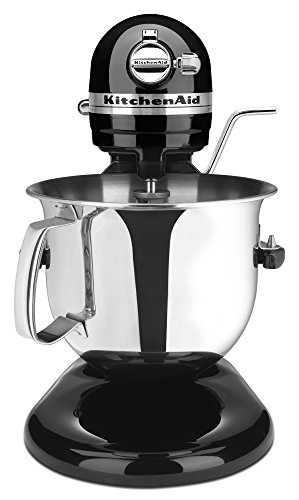
KitchenAid KP26M1XER Professional 600 Series 6-Qt. Bowl-Lift
In: Best Stand Mixers for Bread
- 575W motor with bowl-lift design
- 6-quart stainless bowl
Stand mixers handle dough and large batches. Capacity and motor strength matter.
Standout picks from our best-of lists. Tap any product for features, pros and cons.
In: Best Stand Mixers for Bread
In: Best Stand Mixers Under $200
In: Best Stand Mixers Under $300
In: Best Stand Mixers
In: Best Stand Mixers for Bread
In: Best Stand Mixers Under $200
In: Best Stand Mixers Under $300
In: Best Stand Mixers
Ranked shortlists for specific budgets and use cases. Start with the one that matches yours.
Tilt-head mixers are easier to use for most bakers. Bowl-lift mixers are sturdier for heavy bread dough.
Attachments add versatility.
Tilt-head vs bowl-lift.
5 qt suits most home bakers.
Heavier doughs need stronger motors.
Hub attachments add uses.
Heavy bases reduce wobbling.
Research-based picks from specs, independent reviews and owner feedback.
No paid placements, ever.
Our methodologyOne of our strongest picks is the KitchenAid KP26M1XER Professional 600 Series 6-Qt. Bowl-Lift, a standout in our Best Stand Mixers for Bread list. The Cuisinart SM-50 5.5-Quart 500W Stand Mixer is another excellent choice.
Start with your main use and budget, then compare our shortlists: Best Stand Mixers for Bread, Best Stand Mixers Under $200, Best Stand Mixers Under $300.
Tilt-head vs bowl-lift.
The bowl-lift design clamps the bowl onto a yoke from below, holding it against the dough hook with mechanical force. The tilt-head design holds the head in position with a spring-loaded latch. Under stiff bread dough resistance (especially at 50%+ hydration or with large batch sizes), the tilt-head's spring latch can flex slightly, reducing the precision of the dough hook's path through the dough. Over years of heavy bread baking, this flex can worsen. Bowl-lift models (KitchenAid Pro 600, KitchenAid Pro 5 Plus, Cuisinart SM-70) hold the bowl rigid regardless of dough resistance, producing more consistent kneading on dense or very wet doughs. For bakers making bread once per week or less in standard quantities (one loaf at a time): the flex difference is rarely noticeable. For bakers making 2+ loaves several times per week in heavy dough: bowl-lift is the correct design.
For a standard stand mixer at speed 2 (the correct bread-kneading speed on all KitchenAid models): 7 to 10 minutes for a standard sandwich loaf at 65% hydration. Signs of proper kneading: the dough pulls completely away from the bowl sides and wraps around the hook in one cohesive mass, the surface is smooth (no surface tears when pulled), and the windowpane test (stretching a small piece thin until translucent) holds without tearing. For high-hydration artisan dough (75%+ hydration): the dough will not fully clear the bowl sides and the hook will appear to just fold the dough rather than kneading it, this is normal for wet dough and 10 to 12 minutes at speed 2 is appropriate. Speed 2 is always the correct speed for bread in any KitchenAid, higher speeds add heat and develop gluten too fast.
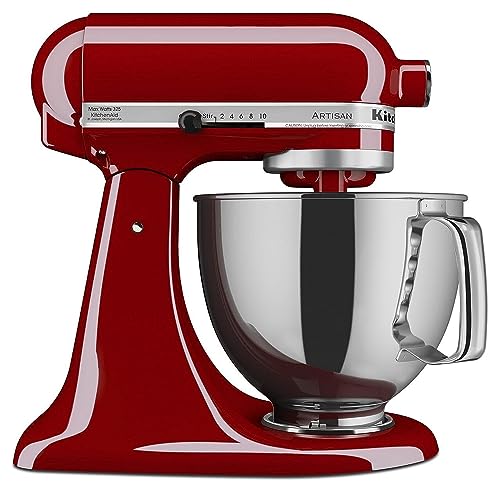
With difficulty, and with batch size limitations. Standard bagel dough is 56 to 60% hydration, stiffer than most bread doughs. The KitchenAid Artisan's 325W motor handles one standard batch (6 to 8 bagels from 3 cups flour) without significant strain at speed 2 for 8 to 10 minutes. For a double batch (12 to 16 bagels from 6 cups flour): the tilt-head may flex and the motor may slow noticeably in the final 2 to 3 minutes. The KitchenAid Professional 600 6-quart bowl-lift (575W) handles double batches of bagel dough without the flex or motor slowing. The Bosch Universal Plus handles bagel dough most effectively of all consumer stand mixers, as its motor placement allows maximum torque without leverage limitations. For occasional bagel making in standard batches: the Artisan is fine. For regular large-batch bagel production: Professional 600 or Bosch is the correct investment.
The spiral dough hook (also called a spiral hook or S-hook) spirals around a central post in a corkscrew shape. The standard C-hook (or J-hook) curves in a single arc. The spiral hook: makes consistent full contact with dough at all sizes from small to large batches, self-centers the dough ball on the hook rather than pushing it to one side, and folds the dough more thoroughly in fewer revolutions. The C-hook: less expensive to manufacture, adequate for standard dough sizes, but can push dough to one side of the bowl rather than centering it, resulting in some dough being worked more than other sections. The spiral hook is standard on the KitchenAid Professional 600 and Pro 5 Plus, and is also the hook design used by the Bosch Universal Plus. The tilt-head Artisan uses a C-hook in its standard configuration. If bread baking is a primary use: the Professional 600's spiral hook is a meaningful performance upgrade over the Artisan's C-hook.
For occasional bread baking (once per week, 1 to 2 loaves, standard sandwich bread dough): yes. The Cuisinart SM-50 at 500W and Hamilton Beach at 400W handle a basic 3-cup flour bread recipe without issue.