
Best overallWaterWarden
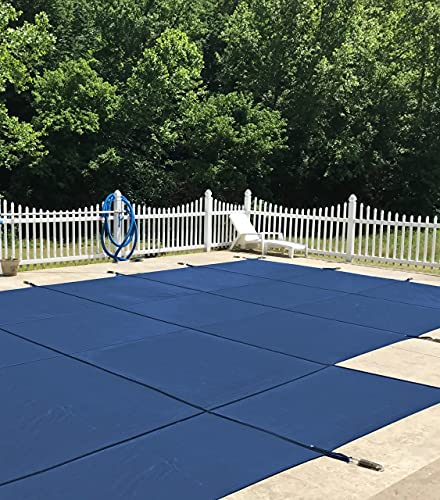
WaterWarden Premium Pool Safety Cover for 12x20 Ft In-Ground Pool
In: Best Inground Pool Covers
- UL-classified per ASTM F1346
- Solid vinyl, blocks nearly 100% of sunlight
Pool covers protect water, save heat and improve safety when chosen correctly.
Standout picks from our best-of lists. Tap any product for features, pros and cons.
In: Best Inground Pool Covers
In: Best Pool Covers You Can Walk On
In: Best Solar Pool Covers
In: Best Inground Pool Covers
In: Best Pool Covers You Can Walk On
In: Best Pool Covers
In: Best Solar Pool Covers
In: Best Inground Pool Covers
Ranked shortlists for specific budgets and use cases. Start with the one that matches yours.
Solar covers retain heat and reduce evaporation. Winter covers keep debris out. Safety covers anchor to the deck and are designed to support weight.
Correct sizing is critical.
Solar, winter or safety.
Measure pool dimensions carefully.
Mesh drains water; solid blocks sunlight.
Look for ASTM-compliant safety covers.
Clean and store properly.
Research-based picks from specs, independent reviews and owner feedback.
No paid placements, ever.
Our methodologyOne of our strongest picks is the WaterWarden Premium Pool Safety Cover for 12x20 Ft In-Ground Pool, a standout in our Best Inground Pool Covers list. The WaterWarden Premium Pool Safety Cover for 18x36 Ft In-Ground Pool with Right Step is another excellent choice.
Start with your main use and budget, then compare our shortlists: Best Inground Pool Covers, Best Pool Covers You Can Walk On, Best Pool Covers.
Solar, winter or safety.
Above-ground pool covers hook to the top rail of the pool wall using an elastic cable or winch-and-cable system, so the cover only needs to match the pool diameter plus a few inches of overlap. Inground pool covers anchor to the surrounding deck, which sits at ground level, so the cover has to extend well past the water's edge onto the coping and deck itself. Standard inground winter covers add a 4 to 5-foot overlap on every side (a 20x40 pool needs roughly a 25x45 cover), and safety covers are measured to the exact deck anchor points, which is why safety covers are far more often custom-fit than stock-sized. Buying an above-ground-style cover for an inground pool will leave gaps at the edges regardless of how it is anchored.
That depends entirely on who has access to the pool. If small children, pets, or anyone unable to swim can reach the pool area unsupervised, a winter tarp is not adequate protection, it is not weight-rated and can fail catastrophically under a person's weight, especially once pooled rainwater or snowmelt sits on top of it. Local and state codes in many areas require a compliant barrier (fence, cover, or both) around residential pools; an ASTM F1346-rated safety cover satisfies the cover portion of that requirement in jurisdictions that allow it. If the pool area is already fully fenced with a self-latching gate and unsupervised access isn't a realistic risk, a winter tarp is a reasonable and much cheaper choice for keeping debris and sun out during the off season.
Winter tarps: 3 to 10 years depending on gauge and UV exposure, with warranties from Robelle and similar brands scaling from 8-year to 20-year based on the scrim weight (heavier oz/yd2 fabric lasts longer and resists tearing from accumulated snow or ice). Mesh safety covers: 10 to 15 years is typical before the mesh weave degrades enough to reduce UV blockage and strength; the webbing and springs often need replacement sooner than the mesh itself. Solid safety covers: 12 to 20 years for the vinyl material, though grommets and anchor straps are wear items that get replaced along the way. Solar covers used on an inground pool during swim season see the shortest lifespan, 3 to 6 years, because UV and pool chemical exposure break down the bubble laminate faster than any other cover type.
Not effectively, and it isn't recommended as a year-round solution. A solar cover left on through winter in a freeze-prone climate can be damaged by ice forming on and around it, and it provides no protection against heavy snow load or debris the way a proper winter cover does. During active swim season, a solar cover on an inground pool works exactly the same as on an above-ground pool: it floats directly on the water and needs a reel or manual removal system sized for the larger surface area (inground rectangular solar covers 20x40 and up get heavy and are typically paired with an in-deck or above-deck reel rather than removed by hand).
Three things, all required together: certification to ASTM F1346, the industry standard that specifies load testing (a cover must support a static load simulating an adult and child without failing); a full perimeter anchor system of brass or stainless anchors set into the deck, spaced at defined intervals, with straps and springs under tension that distribute weight across the anchor points rather than the fabric alone; and fabric or mesh rated for that tension, which is a heavier-gauge polypropylene mesh or reinforced vinyl, not the thin polyethylene used in solar and winter tarp covers. A cover that has only one of these, for example a thick-looking tarp with no spring/anchor system, is not rated to be walked on regardless of how the fabric feels.