Best overallWaterWarden
WaterWarden Premium Pool Safety Cover for 12x20 Ft In-Ground Pool
- UL-classified per ASTM F1346
- Solid vinyl, blocks nearly 100% of sunlight
Everything you need to know about how to choose a pool cover: sizing, materials, r-value, and safety ratings explained, explained plainly.
Before comparing specific covers, decide what problem you're actually solving, because the three main categories don't overlap much in function: Heating the water and cutting evaporation during swim season points to a solar (bubble) cover. Keeping children, pets, or unsupervised visitors out of the water points to an ASTM-rated safety cover.
Round and oval above-ground pools: measure the diameter (round) or the two axis lengths (oval) at the water line. Solar and winter covers for these shapes are sold in standard stock sizes; round to the nearest standard size up, not down.
Heat loss from an uncovered pool happens mostly through evaporation, not direct radiation, evaporative cooling accounts for the majority of overnight temperature drop in most climates. A solar cover addresses this two ways: the bubble structure passes sunlight through to warm the water directly during the day, and that same layer of trapped air acts as insulation, slowing evaporation and heat loss once the sun is down.
standard safety covers areagainst. The test applies a static load approximating an adult and child standing together, roughly 485 lbs distributed over a defined area, and the complete cover system, fabric, webbing, springs, and deck anchors together, must support it without failure.
Best Pool Covers You Can Walk On Check price on amazon: WaterWarden Premium Safety Cover
Best Pool Covers: Top Picks for Solar Heating, Safety, and WinterizingPool Covers · List Our editorial team researches and writes every review independently.
Before comparing specific covers, decide what problem you're actually solving, because the three main categories don't overlap much in function: Heating the water and cutting evaporation during swim season points to a solar (bubble) cover.
Keeping children, pets, or unsupervised visitors out of the water points to an ASTM-rated safety cover.
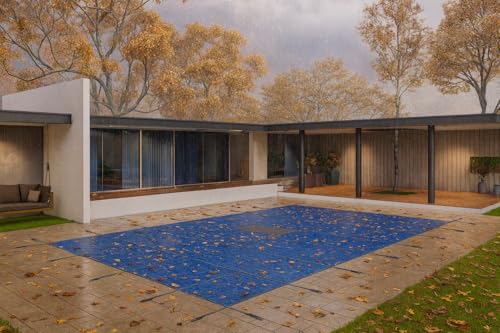
Protecting an unused or lightly-treated pool from debris and sun over the off-season, with no weight-bearing requirement, points to a winter tarp cover.
Many households eventually own two: a solar cover for the swim season and a safety or winter cover for the rest of the year.
Buying one cover expecting it to do all three jobs is the most common source of disappointment in this category, since a cover optimized for solar heat gain has no structural rating, and a cover optimized for structural safety blocks the light needed for meaningful solar heating.
Round and oval above-ground pools: measure the diameter (round) or the two axis lengths (oval) at the water line.
Solar and winter covers for these shapes are sold in standard stock sizes; round to the nearest standard size up, not down.
Rectangular inground pools: measure length and width at the water's edge for a solar cover.
For a winter tarp, add the manufacturer's standard overlap (usually 4 to 5 feet per side) to reach the deck.
For a safety cover, this measurement is a starting point only, installers measure the actual anchor point locations on your specific deck.
Heat loss from an uncovered pool happens mostly through evaporation, not direct radiation, evaporative cooling accounts for the majority of overnight temperature drop in most climates.
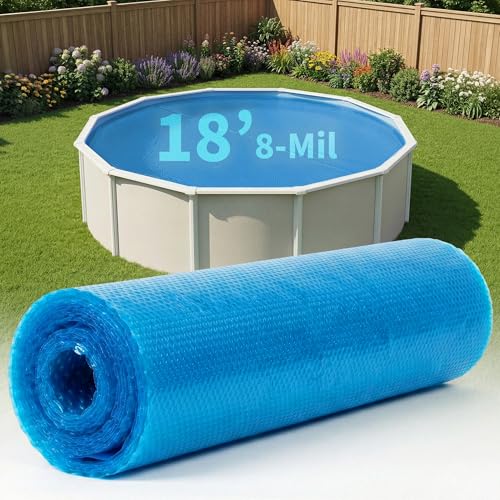
A solar cover addresses this two ways: the bubble structure passes sunlight through to warm the water directly during the day, and that same layer of trapped air acts as insulation, slowing evaporation and heat loss once the sun is down.
Bubble density and mil thickness are the practical proxies for a cover's insulating performance, since most consumer solar covers don't publish a certified R-value the way building insulation does.
Thicker material (12 to 16 mil vs.
8 mil) generally lasts longer and handles UV exposure better, but the difference in actual heat retention between mil thicknesses from the same manufacturer is smaller than the difference between using a cover consistently versus leaving the pool uncovered.
standard safety covers areagainst.
The test applies a static load approximating an adult and child standing together, roughly 485 lbs distributed over a defined area, and the complete cover system, fabric, webbing, springs, and deck anchors together, must support it without failure.
This certification only applies to the system as installed: a cover with the right fabric but incorrect anchor spacing or under-tensioned springs does not deliver its rated performance even though the fabric itself is certified-grade.
When shopping, look for explicit ASTM F1346 certification language and confirm the installation instructions specify anchor spacing and spring tension, not just fabric strength.
Best Pool Covers You Can Walk On Check price on amazon: WaterWarden Premium Safety Cover Check price on amazon: Blue Wave NS420 Solar Cover
Start with the water's surface dimensions, then add the correct overlap for the cover type. For solar covers on above-ground pools, match the pool diameter or footprint as closely as possible; a slightly oversized cover trims easily along the bubble seams with scissors, while an undersized one leaves exposed water that cuts into both heating and evaporation benefits. For inground winter tarps, add a 4 to 5-foot overlap on every side so water bags or anchors sit on solid deck rather than hanging past the edge, a 20x40 pool needs roughly a 25x45 cover. For safety covers, skip DIY sizing entirely: these are measured to the specific anchor point pattern set into your deck, and most manufacturers or local installers do an on-site measurement even for a nominally standard rectangle, because a few inches of error affects both fit and the safety rating.
R-value measures resistance to heat flow, the same metric used for building insulation. In pool covers it's most relevant to solar and thermal covers, where a higher R-value means the cover does a better job of trapping heat that's already in the water overnight rather than letting it radiate and evaporate away. Most consumer solar covers don't publish a formal R-value the way insulation does, but the practical proxy is bubble density and mil thickness: more bubbles per square foot and thicker material generally trap more heat. The bigger driver of a pool's actual heat retention, though, is simply whether the cover is on or off, a cover used consistently every night when the pool isn't in use outperforms a higher-R-value cover used inconsistently.
Mesh safety covers are woven polypropylene that lets rainwater and snowmelt drain through immediately while screening out leaves and debris; they block roughly 92% of sunlight and never need a cover pump. Solid safety covers are reinforced vinyl that blocks essentially all light and debris but require an automatic or manual cover pump to remove any water that accumulates on top, since standing water adds weight and can pool in low spots. Both are load-to the same ASTM F1346 standard when properly certified, so the choice isn't about safety, it's about maintenance: mesh for less hands-on upkeep, solid for maximum algae control and a completely clean pool underneath at cover removal.
ASTM F1346 is the standard test protocol U.S. safety covers are certified against. It applies a static load to a defined test area intended to represent an adult and child standing together, roughly 485 lbs distributed rather than concentrated at a single point, and the cover assembly (fabric, webbing, springs, and anchors together) must support that load without failure or excessive deflection. A cover only carries this rating as a complete, correctly installed system: the fabric strength alone means nothing without properly spaced and torqued deck anchors and springs under the tension the manufacturer specifies. This is why a certified safety cover lists both a fabric rating and detailed installation specs, and why installation quality affects real-world safety as much as the product itself.