Best overallWaterWarden
WaterWarden Premium Pool Safety Cover for 12x20 Ft In-Ground Pool
- UL-classified per ASTM F1346
- Solid vinyl, blocks nearly 100% of sunlight
Fix pool cover problems, covers blowing off, sagging into the water, anchors pulling out, and size mismatch for irregular pools. Works for solar covers, winter covers, and safety covers.
Work through these in order, the most common causes come first.
Before working through all eight fixes, identify your specific problem: Cover blowing off in wind: insufficient edge anchoring. Fix 1 (water bags) and Fix 7 (cable/winch for above-ground pools). Solar cover sagging into the water: bubble integrity loss (end-of-life cover) or oversized cover with excess fabric creating a low point.
Pool covers fail to stay in position for two reasons: Insufficient edge anchoring weight: solar and winter covers rest on the pool surface with no mechanical attachment. Wind lifts the unsecured edge and either slides the cover sideways or rolls it off entirely. The fix is water bags (perimeter weighting) or a cable-and-winch system, not tape or additional material.
For in-ground pools with solar or winter covers: water bags are the correct anchoring method. Space them every 2 feet around the perimeter. Fully fill each bag, a partially filled water bag tips and loses its anchoring effect.
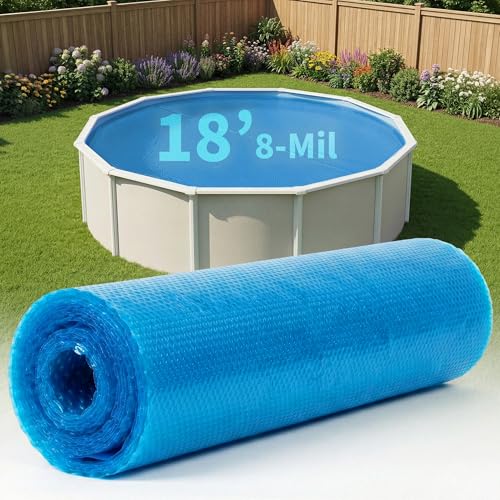
A solar cover with collapsed or flat bubbles (press-test to verify they spring back) is at end of life and cannot be repaired. The bubbles provide the buoyancy, without them, the cover becomes a flat sheet that sinks. Budget solar covers last 2-3 years; quality 12-mil covers (Blue Wave, Swimline) last 4-6 years with correct storage.
Before working through all eight fixes, identify your specific problem: Cover blowing off in wind: insufficient edge anchoring.
Fix 1 (water bags) and Fix 7 (cable/winch for above-ground pools).
Solar cover sagging into the water: bubble integrity loss (end-of-life cover) or oversized cover with excess fabric creating a low point.
Safety cover lifting at sections: loose or pulled-out deck anchor.
Fix 3, an unrepaired anchor invalidates the ASTM safety rating.
Pool covers fail to stay in position for two reasons: Insufficient edge anchoring weight: solar and winter covers rest on the pool surface with no mechanical attachment.
Wind lifts the unsecured edge and either slides the cover sideways or rolls it off entirely.
The fix is water bags (perimeter weighting) or a cable-and-winch system, not tape or additional material.
Wrong cover size: a cover significantly larger than the pool creates excess fabric that pools, folds, and provides wind-catchment area.
A cover sized to pool dimensions plus 2 feet of overhang on each side provides the correct amount for water bag anchoring without excess.
For in-ground pools with solar or winter covers: water bags are the correct anchoring method.
Space them every 2 feet around the perimeter.
Fully fill each bag, a partially filled water bag tips and loses its anchoring effect.
Replace any water bags that have developed pinholes (they deflate over the course of a week).
Water bags work on the weight principle: the bag's weight sits on the cover material, which pulls the cover edge down against the pool coping.
A solar cover with collapsed or flat bubbles (press-test to verify they spring back) is at end of life and cannot be repaired.
The bubbles provide the buoyancy, without them, the cover becomes a flat sheet that sinks.
Budget solar covers last 2-3 years; quality 12-mil covers (Blue Wave, Swimline) last 4-6 years with correct storage.
A safety cover with torn strap webbing that cannot be repaired with the manufacturer's repair kit needs full replacement.
Do not use a safety cover with compromised straps, the cover's ASTM F1346 rating depends on all straps being functional.
Best Pool Covers, solar, winter, and safety covers compared Best Solar Pool Covers, solar heating cover picks How to Choose a Pool Cover, solar vs safety vs winter cover guide Solar Cover vs Safety Cover, key differences explained
Measure the longest and widest points of the pool at the water surface, then add 2 feet to each measurement for a solar or winter cover (gives enough overhang for water bag anchoring). For an in-ground rectangular pool that is 16 by 32 feet, order an 18 by 34 foot cover. For safety covers, measure to the deck anchor points (not the pool edge), the cover manufacturer will specify the measurement method for their anchor pattern. For irregular pool shapes: take measurements at every length change point and contact the manufacturer for a custom cover recommendation.
Solar bubble covers can be trimmed with scissors to fit irregular pool shapes, trim on the smooth (non-bubble) side. The cut edge does not seal or bind, it simply leaves a raw edge that will not degrade faster than the rest of the cover. Winter vinyl covers can also be trimmed, though the cut edge should be sealed with vinyl edge tape to prevent the vinyl from peeling. Safety covers cannot be trimmed, the anchor strap locations are engineered for the specific cover dimensions, and cutting the cover alters the anchor geometry and invalidates the ASTM safety rating.
In-ground pool covers sink in the middle when: the cover is too large and the excess fabric creates a low point, the water bags anchoring the edges have not been filled adequately and the edges lift while the center sags, or the cover has accumulated enough water on top to cause collapse. Fix with: a correctly sized cover (pool dimension plus 2 feet on all sides for a winter cover), fully filled water bags at 2-foot intervals, and a cover pump for ongoing water removal.
A quality solar cover (12-mil Blue Wave, 12-mil Swimline) lasts 3 to 5 years with correct storage and use. Factors that shorten lifespan: high chlorine levels (above 3 ppm sustained contact), extended sun exposure when not in use (cover stored unrolled in sunlight), and sharp pool edges that abrade the bubble surface. Factors that extend lifespan: using a cover reel (prevents fold-line degradation), washing and drying before storage, and maintaining balanced pool chemistry. Budget covers (6-mil or thinner) last 1 to 2 years.