Zenna Home
Zenna Home Heavyweight Shower Curtain Liner, 8-Gauge EVA
- 8-gauge EVA thickness, roughly 2.5x a standard 3G liner
- Weighted hem keeps the bottom edge pinned against the tub
Splash Home
Sponsored link · confirm price and availability on Amazon · updated
Yes, for the right buyer. The Splash Home Pearl Tree PEVA 4G Premium Plastic Shower Liner ranks #8 in our Best Shower Curtains list. Its biggest strength: lowest odor out of the box of any waterproof option in this guide, since PEVA skips the PVC chemical smell. The main caveat: 4-gauge thickness billows more in shower airflow than a 6G or 8G liner.
What earns it a place here: lowest odor out of the box of any waterproof option in this guide, since PEVA skips the PVC chemical smell and cheapest fully waterproof, single-layer option available here. The tradeoff: 4-gauge thickness billows more in shower airflow than a 6G or 8G liner.
Pros
Cons
Think twice if this matters to you
| List | Rank |
|---|---|
| Best Shower Curtains | #8 / 10 |
Products ranked near it in our research, each better for a slightly different buyer.
Yes, for the right buyer. The Splash Home Pearl Tree PEVA 4G Premium Plastic Shower Liner ranks #8 in our Best Shower Curtains list. Its biggest strength: lowest odor out of the box of any waterproof option in this guide, since PEVA skips the PVC chemical smell. The main caveat: 4-gauge thickness billows more in shower airflow than a 6G or 8G liner.
The main trade-offs owners and reviewers point to: 4-gauge thickness billows more in shower airflow than a 6G or 8G liner; tears at the grommet holes sooner than vinyl or the 8-gauge EVA liner in this guide; typically needs replacement within 6 to 9 months of daily use, sooner than a heavier liner.
4-gauge PEVA construction, Chlorine-free, low-odor material, Fully waterproof, single-layer use, 70 x 72-inch fit and Rustproof grommets.
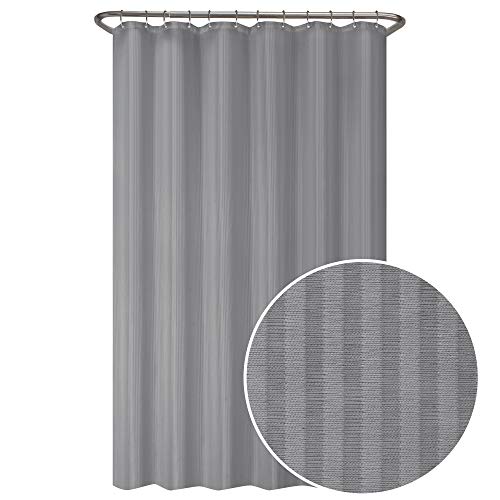
Worth comparing: Zenna Home Heavyweight Shower Curtain Liner, 8-Gauge EVA, Zenna Home Ultimate Striped Waterproof Fabric Shower Curtain, Grey and Splash Home Prisma Design Polyester Shower Curtain. Each ranks near it in our research for a slightly different buyer.
It's sold on Amazon. Prices and stock change often, so check the current listing before you buy, our link takes you straight to it.
Mold and mildew grow where three conditions overlap: standing moisture, warmth, and an organic food source (soap scum, skin cells, fabric fibers). A shower curtain that stays wet after each use, folded against itself in the curtain's natural creases, creates exactly this environment: trapped moisture between folds that never fully dries between showers. The bottom 6 to 8 inches of a liner, which sits closest to standing water and gets the least airflow, is where mildew typically starts first, visible as small black or pink-orange spots. PEVA and vinyl resist mold growth on the material itself better than fabric does, since mold needs organic material to colonize and plastic offers less of a foothold than woven fiber, but soap scum buildup on any material's surface gives mold something to grow on regardless of the base material.
Manufacturers apply an antimicrobial agent (commonly a silver-ion or quaternary ammonium compound) to the fabric or plastic surface during production. This treatment inhibits microbial growth on the treated surface itself for the useful life of the product, it does not eliminate the need for regular cleaning or make the curtain immune to mold if soap scum and moisture are allowed to accumulate unchecked. In practical terms: a treated curtain that gets an occasional wipe-down will stay mildew-free noticeably longer than an untreated curtain under the same conditions, but a treated curtain that is never cleaned and stays wet between uses will eventually develop mold anyway, just on a longer timeline than an untreated one.