
Splash Home
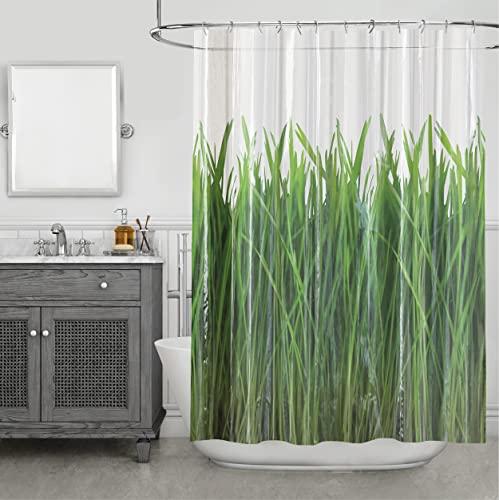
Splash Home Grass PEVA 5G Shower Liner
- 5-gauge PEVA construction
- Rustproof metal grommets at every hook point
Do disposable paper toilet seat covers actually block bacteria and germs? A look at what microbiology testing shows about toilet seat contamination, how seat covers help and where they fall short, and
Disposable paper toilet seat covers do what they are physically capable of doing: they place a barrier of paper between skin and the seat surface, blocking direct contact with whatever is on the seat in that moment. What they do not do is sterilize the seat, block airborne transmission from flushing, or address the surfaces in a public restroom that actually carry the highest bacterial load, which repeated testing shows is usually not the seat itself.
Microbiology studies that swab and culture samples from public restroom surfaces have repeatedly found the same pattern: toilet seats test lower in total bacterial colony counts than door handles, faucet handles, and flush levers in the same room. This is counterintuitive to most people's instinct, but the explanation is straightforward.
The more relevant contamination pathway that a seat cover does not address is what infection control researchers call toilet plume: when a toilet is flushed with the lid open (most public toilets have no lid at all), the flush creates enough turbulence to aerosolize a fine mist of bowl contents into the air. This mist settles on nearby surfaces within a radius of several feet, including the seat, the floor, the walls, and any exposed personal items like a phone or purse set on a nearby surface.
Worth it: a restroom with visibly poor maintenance, a seat with visible moisture, residue, or debris, or a personal comfort/anxiety factor that makes the psychological reassurance itself valuable regardless of the underlying microbiology. Travel settings (airports, rest stops, gas stations) where restroom maintenance quality is unpredictable are a reasonable default use case.
If the goal is genuinely minimizing bacterial exposure in a public restroom, the evidence points to a different priority list than seat covers: Hand washing after use, for at least 20 seconds with soap, is the single highest-impact intervention, addressing the actual transmission pathway (hand-to-mouth or hand-to-face contact after touching contaminated surfaces) rather than the seat specifically. Closing the lid before flushing, where a lid is present, reduces plume-based surface contamination throughout the room, including on the seat itself for the next user.
Toilet seat covers work at the narrow task they are built for: blocking direct skin contact with the seat surface at a given moment. They are not a meaningful defense against the airborne and higher-traffic-surface contamination pathways that actually carry more bacterial load in a typical public restroom.
Disposable paper toilet seat covers do what they are physically capable of doing: they place a barrier of paper between skin and the seat surface, blocking direct contact with whatever is on the seat in that moment.
What they do not do is sterilize the seat, block airborne transmission from flushing, or address the surfaces in a public restroom that actually carry the highest bacterial load, which repeated testing shows is usually not the seat itself.
The honest framing is that a seat cover reduces one specific, minor exposure pathway (direct skin contact with the seat surface) while doing nothing about several other exposure pathways in the same restroom that test as more contaminated.
Microbiology studies that swab and culture samples from public restroom surfaces have repeatedly found the same pattern: toilet seats test lower in total bacterial colony counts than door handles, faucet handles, and flush levers in the same room.
This is counterintuitive to most people's instinct, but the explanation is straightforward.
Made of smooth, non-porous plastic that does not harbor bacteria the way porous or textured surfaces do Cleaned on a regular janitorial schedule in most commercial and public settings Touched by hands far less often than a door handle, since most people avoid direct hand contact with a toilet seat out of instinct Door handles, by contrast, are touched by essentially every person who enters the room, are rarely cleaned as frequently as toilet fixtures, and are made of materials (brushed metal, painted surfaces) that can harbor bacteria in surface imperfections.
The more relevant contamination pathway that a seat cover does not address is what infection control researchers call toilet plume: when a toilet is flushed with the lid open (most public toilets have no lid at all), the flush creates enough turbulence to aerosolize a fine mist of bowl contents into the air.
This mist settles on nearby surfaces within a radius of several feet, including the seat, the floor, the walls, and any exposed personal items like a phone or purse set on a nearby surface.
A paper seat cover placed before sitting does nothing to address this, since the plume occurs on flush, both before and after use, and settles on surfaces broadly rather than concentrating on the seat specifically.
The practical countermeasures for this exposure pathway are closing the lid before flushing (where a lid exists), and not setting personal items on any nearby surface, not seat cover use.
Worth it: a restroom with visibly poor maintenance, a seat with visible moisture, residue, or debris, or a personal comfort/anxiety factor that makes the psychological reassurance itself valuable regardless of the underlying microbiology.
Travel settings (airports, rest stops, gas stations) where restroom maintenance quality is unpredictable are a reasonable default use case.
Not particularly necessary: a well-maintained public restroom with a visibly clean seat, given that surface testing shows the seat is not the primary contamination risk in the room to begin with.
In these settings, the marginal hygiene benefit of a cover is small, though the comfort benefit for someone who prefers using one remains valid regardless.
If the goal is genuinely minimizing bacterial exposure in a public restroom, the evidence points to a different priority list than seat covers: Hand washing after use, for at least 20 seconds with soap, is the single highest-impact intervention, addressing the actual transmission pathway (hand-to-mouth or hand-to-face contact after touching contaminated surfaces) rather than the seat specifically.
Closing the lid before flushing, where a lid is present, reduces plume-based surface contamination throughout the room, including on the seat itself for the next user.
Using a paper towel or your sleeve to touch the door handle on the way out addresses the surface that testing shows carries the highest bacterial load in most public restrooms.
A seat cover, as a fourth-priority, low-cost, low-effort addition, for direct-contact comfort and the (real but limited) reduction in exposure to visible seat surface residue.
Toilet seat covers work at the narrow task they are built for: blocking direct skin contact with the seat surface at a given moment.
They are not a meaningful defense against the airborne and higher-traffic-surface contamination pathways that actually carry more bacterial load in a typical public restroom.
Using one is a reasonable, low-cost habit, particularly for comfort or in visibly under-maintained restrooms, but it should not replace hand washing as the actual primary hygiene intervention after using a public restroom.
Best Mold-Resistant Shower Curtains
No, repeatedly, in microbiology studies swabbing public restroom surfaces, toilet seats consistently test lower in bacterial colony counts than the door handle, the faucet handle, and the flush lever in the same restroom. The reason is mundane: toilet seats are smooth, hard, non-porous plastic that gets regularly cleaned by janitorial staff and, because of the psychological aversion most people have to touching a toilet seat, gets relatively little direct hand contact compared to a door handle every single visitor touches. This does not mean toilet seats are sterile, but the popular assumption that the seat is the primary contamination risk in a public restroom is not what the actual surface testing shows.
Swab studies of public toilet seats typically find a mix of skin flora (bacteria normally present on human skin, largely harmless to a healthy person on contact), general environmental bacteria, and in some testing, low levels of fecal-associated bacteria, though at levels far lower than what is found on the toilet bowl itself or on frequently-touched fixtures nearby. The flush mechanism, in particular, aerosolizes some contents of the bowl in a fine mist when flushed with the lid open (a well-documented phenomenon called toilet plume), which settles on nearby surfaces, including the seat, but also the walls, floor, and any exposed toiletries within a few feet. This is a stronger argument for closing the lid before flushing than for the seat cover addressing the primary contamination pathway.
Two legitimate reasons remain even without a strong contamination-reduction argument. First, comfort and psychological reassurance: many people experience real discomfort or anxiety about direct contact with a surface used by strangers, and a barrier addresses that discomfort regardless of the actual microbiology, which has real value for the person using it. Second, temperature and direct-contact hygiene basics: a cover blocks direct skin contact with whatever visible residue, moisture, or debris might be on a given seat at that specific moment, which is a lower bar than 'blocks bacterial transmission' but still a real, practical function, especially in poorly maintained restrooms where a seat's condition is visibly questionable.

