
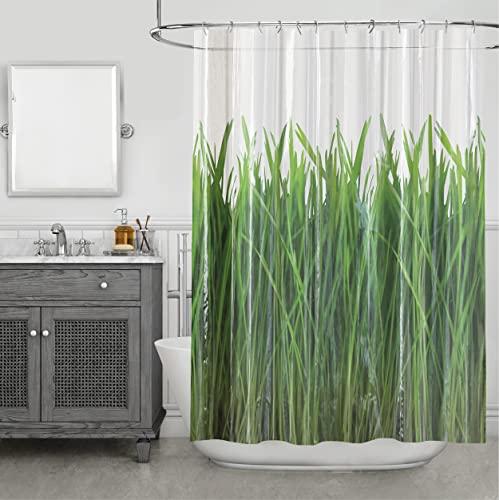
Splash Home
Splash Home Grass PEVA 5G Shower Liner
- 5-gauge PEVA construction
- Rustproof metal grommets at every hook point
Remove mold from shower curtains and liners, bleach vs vinegar methods, machine washing steps, and how to prevent mold from returning with ventilation changes and antimicrobial liners.
Work through these in order, the most common causes come first.
The mistake most people make is treating shower curtain mold as a cleaning problem. It is an environmental problem. Cleaning kills the visible growth; the environment regrows it.
The right cleaning method depends on the mold stage and the curtain material. Vinegar (Fix 1): for early mildew, pink spots, light gray or white discoloration, surface mold that has not embedded deeply. Vinegar is safe for all curtain and liner materials including colored fabric and polyester.
Unplug (or remove batteries) for a full 60 seconds, not 5. This clears fault states that a quick toggle won't.
Try a different outlet, cable, and adapter. A surprising share of 'dead' devices are starved by a failing cable.
Look up the model's reset combination (usually holding a button 10+ seconds). Reconfigure from scratch afterward.
The mistake most people make is treating shower curtain mold as a cleaning problem.
It is an environmental problem.
Cleaning kills the visible growth; the environment regrows it.
Mold needs three things: moisture, warmth, and a surface.
The bathroom provides all three continuously.
The right cleaning method depends on the mold stage and the curtain material.
Vinegar (Fix 1): for early mildew, pink spots, light gray or white discoloration, surface mold that has not embedded deeply.
Vinegar is safe for all curtain and liner materials including colored fabric and polyester.
The acetic acid kills surface mold spores and deodorizes.
Bleach (Fix 2): for embedded black mold, dark staining that has been present for weeks.
This is the most practical question: at what point is cleaning not worth doing?
Clean the liner: when the mold is recent (less than 4-6 weeks), mostly surface-level, and the liner is less than 3 months old.
Replace the liner: when the mold staining persists through cleaning, when the liner material has yellowed, or when the hem has discoloration from the previous mold growth that never fully removed.
Replace the outer curtain: when mold is embedded in the fabric weave after multiple cleaning attempts.
Quality fabric shower curtains (polyester from Maytex, InterDesign, or similar) can last 2-3 years with monthly washing before the material or pattern degrades enough to warrant replacement.
Best Shower Curtains, top fabric and vinyl picks Best Mold-Resistant Shower Curtains, antimicrobial liner options How to Choose a Shower Curtain, material and liner guide
Mix 1 cup of 3% hydrogen peroxide with 1 cup of water. Apply to the moldy areas and allow to sit for 30 minutes. Scrub with a soft brush and rinse. Alternatively, make a paste of baking soda and water, apply it, scrub, and rinse. Both methods are color-safe and less damaging than bleach to fabric. For stubborn embedded mold, oxygen bleach (OxiClean) in warm water is the strongest color-safe option. If none of these remove the staining: the mold is embedded in the material and replacement is needed.
Persistent mold returns when the root conditions are not addressed: insufficient drying between showers (curtain not spread after showering), inadequate bathroom ventilation, or a liner past its useful life. Clean the curtain, but also address the environment: spread the curtain after every shower, run the exhaust fan for 15-20 minutes post-shower, and replace the liner if it is more than 6 months old with heavy mold history.
Standard PEVA and vinyl liners cannot go in the dryer, the heat warps them. Polyester fabric liners can be tumble dried on low heat. Check the care label; if no label is present on a vinyl/PEVA liner, always hang dry.
Monthly washing is the standard recommendation for fabric curtains in daily-use bathrooms. Every 2-3 months is adequate for bathrooms with good ventilation where the curtain dries fully between showers. The liner needs more frequent replacement (every 3-6 months) than the outer curtain (1-2 years). Signs that a wash is overdue: visible mildew spots, musty odor when running the shower, or pink discoloration at the hem.

