
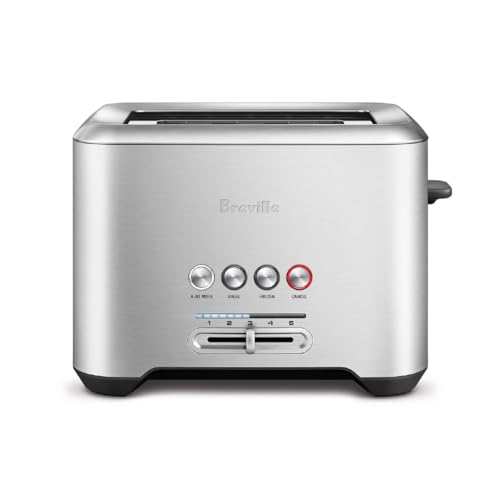
Best overallBreville
Breville BTA720XL Die-Cast 2-Slice Smart Toaster
- Thermostatic (Element IQ) shade control
- 1.5-inch wide slots
Everything you need to know about toaster not toasting evenly: 8 causes and fixes, explained plainly.
Work through these in order, the most common causes come first.
Toaster Buying Guide, specifications before replacing Best Toasters, replacement options
Unplug (or remove batteries) for a full 60 seconds, not 5. This clears fault states that a quick toggle won't.
Try a different outlet, cable, and adapter. A surprising share of 'dead' devices are starved by a failing cable.
Look up the model's reset combination (usually holding a button 10+ seconds). Reconfigure from scratch afterward.
Check the companion app or manufacturer site for firmware updates that address known faults.
Toaster Buying Guide, specifications before replacing Best Toasters, replacement options
In a 2-element toaster (one element on each side of the slot): if one element is running hotter than the other, one bread side toasts darker. Causes: one element is wearing out faster (resistance increases as the element ages, producing more heat in the remaining functional wire); or the elements were never perfectly matched from manufacture (common in budget toasters where element matching is less precise). Test: toast two slices simultaneously and observe which bread surface (facing each slot wall) is darker. If the darker surface is always on the same slot wall: that element runs hotter. Fix for minor difference: rotate the bread 180° halfway through the cycle to equalize. Fix for significant difference: the asymmetric element is near end-of-life; plan for replacement.
The edges dry out and crisp through proximity to the element at the slot edges (the element is closest to the bread at the slot walls). The center of the bread is farther from any element surface and receives primarily radiant heat, at low shade settings, the radiant heat is not sufficient to fully dry the bread center. Fix: increase the shade setting, setting 3 or above provides enough element heat and time for the center to reach full browning temperature. If the center remains pale even at maximum setting: the elements may be at reduced efficiency (worn or scaled). Also: thicker bread requires higher settings and longer cycles to heat through; what looks like center unevenness is sometimes center undercooking, use a higher setting.
Yes, entirely normal. The first cycle heats the element and toaster body from room temperature; the element reaches full operating temperature partway through the cycle, producing slightly less even browning than a pre-warmed element. The second cycle starts with a warm element and produces more consistent browning at the same setting. This is why professional bakers and hotel restaurants always discard or eat the first waffle/toast of the morning. For home use: accept that the first piece may be slightly different, or run a 30-second warm-up cycle with no bread before the first actual toast.

