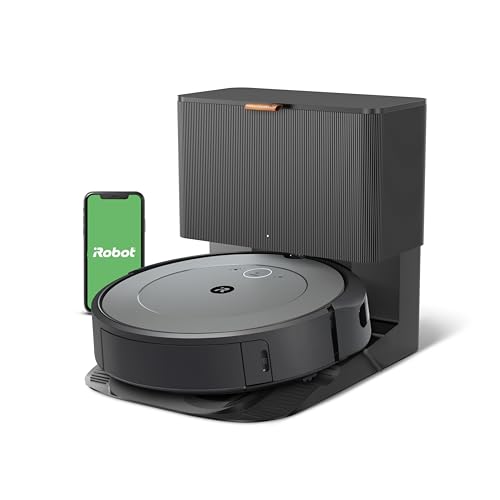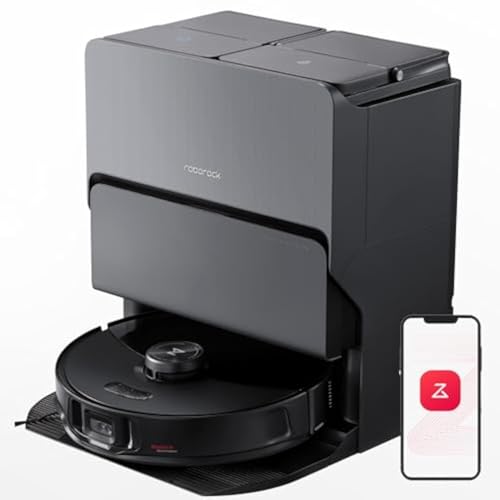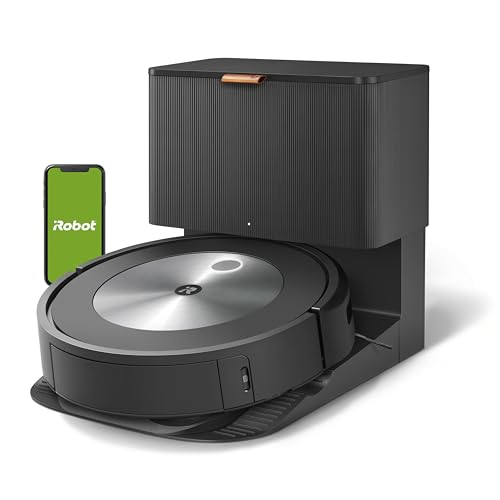
Best OveralliRobot
iRobot Roomba j7+ Self-Emptying Robot Vacuum
- PrecisionVision pet waste avoidance
- Rubber extractors
Most of that range is noise. This guide explains the four features that determine whether a robot vacuum is actually useful, and the marketing claims that do not.
The most important thing to understand before buying a robot vacuum: there is a fundamental divide between random navigation and systematic navigation models.
Random navigation (sometimes called "iAdapt 1.0" or simply "smart sensor") works by bouncing off walls and furniture in a pattern designed to cover floor area over time.
In a 200 square foot room, a random navigation robot covers approximately 70 to 80% of the floor area per cleaning cycle.
The missed 20 to 30% are consistent, the same corners and areas are missed every time.
Systematic navigation (LiDAR, cameras, visual inertial odometry) maps the room and cleans in a methodical row-by-row pattern, like a lawn mower.
Robot vacuum manufacturers publish suction in Pascals (Pa).
The numbers are genuine and comparable within a brand, but marketing has inflated them relative to what floors actually require: 2000Pa: adequate for hardwood, tile, laminate, and very low carpet (under 0.25 inches).
Insufficient for embedded pet hair on any carpet.
2500Pa to 3000Pa: adequate for low to medium carpet (0.25 to 0.75 inches).
Handles pet hair on low carpet.
The practical case for self-emptying is not cleanliness, it is consistency.
A robot vacuum that you forget to empty for a week stops cleaning effectively when its bin fills.
A self-emptying robot vacuum continues running daily without intervention.
Self-emptying bases hold 30 days (Roborock Q7+) to 60 days (Shark IQ XL) of debris depending on the model.
The base uses a vacuum to pull debris from the robot's bin into a sealed bag that you replace when full.
Robot vacuum mopping attaches a damp pad to the robot's underside and drags it across hard floors during the cleaning pass.
This is effective for: Light dust and residue removal on hardwood and tile Daily pet scent maintenance on hard floors Reducing the frequency of manual mopping Scrub effectively, the pad drags, it does not scrub
Best Robot Vacuums, top picks across all budgets How to Choose a Robot Vacuum, step-by-step decision guide Roomba vs Roborock, the two leading brands compared
Systematic (LiDAR or camera mapped) robot vacuums cover 90 to 95% of accessible floor area. Random navigation models cover 70 to 80%. This gap does not close with better suction or a fancier brush. Navigation is the threshold feature.
For maintenance cleaning between deep cleans, yes. For deep cleaning, moving furniture, cleaning upholstery, reaching ceiling corners, a robot vacuum is not a replacement. The correct framing: a robot vacuum does the 80% of daily maintenance cleaning automatically. A traditional vacuum does the 20% that requires human judgment.
For maintenance cleaning, daily or every other day in active households. Pet hair households benefit from daily runs. The key is that robot vacuums are most effective at low-volume maintenance cleaning done frequently, not at catching up with heavy soiling.
For most households, yes. The practical benefit is that the robot can run daily without owner intervention. Without self-emptying, manual bin emptying every 2 to 3 runs is required, and the friction of that task causes most people to use the robot less.
Most modern robot vacuums handle low-pile area rugs (under 0.75 inches) without difficulty. High-pile rugs (1 inch or more) block many robot vacuums' ability to navigate from the rug to hard floor, the edge becomes an obstacle. Most modern robots with virtual barriers can be set to avoid high-pile rugs.