

KitchenAid
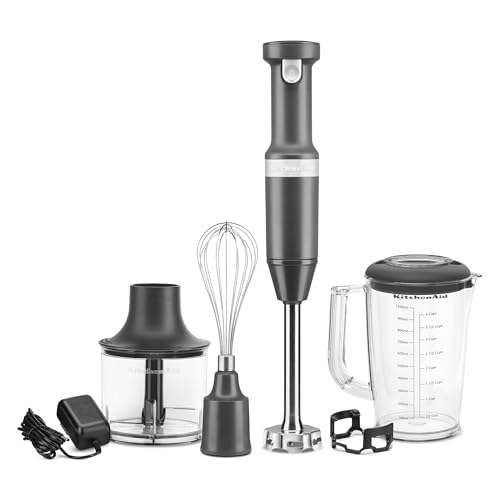
KitchenAid Cordless Variable Speed Hand Blender KHBBV83
In: Best Cordless Immersion Blenders
- Rechargeable lithium-ion battery, 20+ minutes of run time per charge
- Variable speed control via twist dial on the base
An immersion blender purees right in the pot, saving transfers and cleanup.
Standout picks from our best-of lists. Tap any product for features, pros and cons.
In: Best Cordless Immersion Blenders
In: Best Immersion Blenders Under $50
In: Best Immersion Blenders
In: Best Cordless Immersion Blenders
In: Best Immersion Blenders Under $50
In: Best Immersion Blenders
In: Best Cordless Immersion Blenders
In: Best Immersion Blenders Under $50
Ranked shortlists for specific budgets and use cases. Start with the one that matches yours.
Stick blenders are ideal for soups, sauces, baby food and small smoothies. They're quick to clean and store easily.
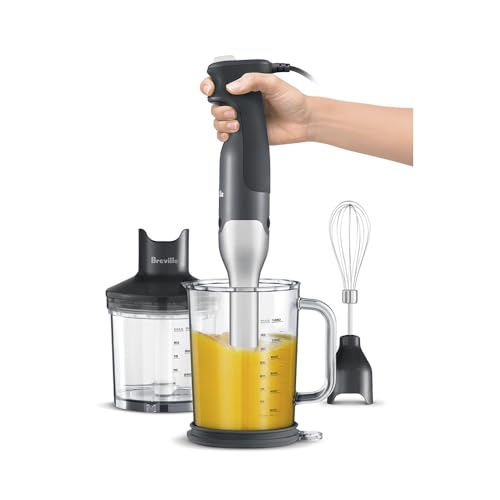
Attachments like whisks and chopper bowls add flexibility.
Stronger motors handle thicker blends.
Variable speed reduces splashing.
Cordless is convenient; corded gives steady power.
Stainless guards resist stains and won't scratch pots badly.
Whisks and choppers expand uses.
Research-based picks from specs, independent reviews and owner feedback.
No paid placements, ever.
Our methodologyOne of our strongest picks is the KitchenAid Cordless Variable Speed Hand Blender KHBBV83, a standout in our Best Cordless Immersion Blenders of 2026 list. The Cuisinart CSB-75BC Smart Stick Hand Blender is another excellent choice.
Start with your main use and budget, then compare our shortlists: Best Cordless Immersion Blenders of 2026, Best Immersion Blenders Under $50, Best Immersion Blenders of 2026.
Stronger motors handle thicker blends.
Most cordless immersion blenders run 15 to 25 minutes of blending time per charge, which typically equals 20 to 40 separate uses of 30 to 60 seconds each. The KitchenAid Go Cordless is rated for longer run time than budget models. Battery capacity decreases after 300 to 500 charge cycles (roughly 1 to 2 years of daily use), and most cordless immersion blenders have non-replaceable batteries. For daily heavy use: a corded model is more practical long-term. For occasional use: battery capacity is rarely the limiting factor.
At the same price point: no. Battery-powered motors deliver less continuous wattage than direct-current motors at the same price due to the battery's internal resistance and voltage limitations. For thick mixtures and tough vegetables: corded models are the better choice. For light soups and sauces where cordless convenience is the priority: cordless is adequate.
Yes, cordless models handle hot liquids the same way as corded models, as long as the blending shaft is rated for hot liquids (check the product manual; most are). The cord-free convenience is actually more useful for hot soup than for cold blending, reaching into a pot of hot soup with a corded model requires managing the cord safely near a hot stove. Cordless eliminates that hazard.
These are all cooked or soft ingredients with liquid, the easiest tasks for any immersion blender. What they handle poorly: fibrous raw vegetables, thick hummus from partially cooked chickpeas, and any dry processing.
For immersion blenders: brand reputation and motor design matter more than watt ratings.


