KitchenAid
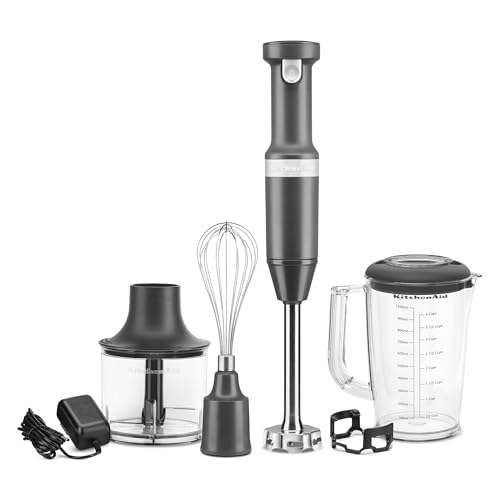
KitchenAid Cordless Variable Speed Hand Blender KHBBV83
- Rechargeable lithium-ion battery, 20+ minutes of run time per charge
- Variable speed control via twist dial on the base
Everything you need to know about immersion blender buying guide: motor power, bell guard, and attachments explained, explained plainly.
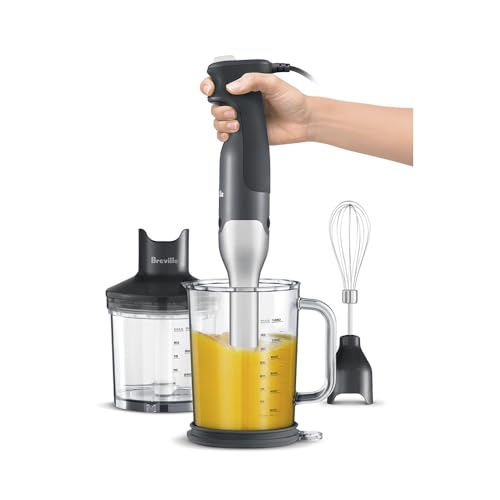
Best Immersion Blenders, full ranked list How to Choose an Immersion Blender, decision questions Breville Immersion Blender Review, the top-ranked model reviewed
For smooth soups, cooked sauces, and some smoothies: yes. For ice crushing, nut butter, large-batch processing, and fibrous raw vegetables: no. An immersion blender is the more convenient tool for hot soups (blend in the pot, no transfer) and quick emulsification tasks. A countertop blender is necessary for large volumes, hard ingredients, and high-performance frozen-food processing. Most households benefit from having both, the immersion blender for daily soup and sauce tasks, the countertop blender for smoothies and more demanding applications.
The fastest method: fill a tall cup or the included beaker with warm soapy water, submerge the blending shaft, and run for 20 to 30 seconds. The vortex cleans the blade and shaft interior. Rinse under running water. For the shaft end: a bottle brush or the dishwasher (stainless steel shaft, blade guard) handles any remaining residue. Clean immediately after use, dried soup or sauce around the blade guard is significantly harder to remove than fresh residue. Never submerge the motor body in water.
Same thing, different names. Immersion blender, hand blender, and stick blender all refer to the same tool: a handheld motor body with a long blending shaft that is submerged directly into food. The term 'hand blender' is more common in Europe and the UK; 'immersion blender' and 'stick blender' are more common in North America. The tool is functionally identical regardless of what the package calls it.