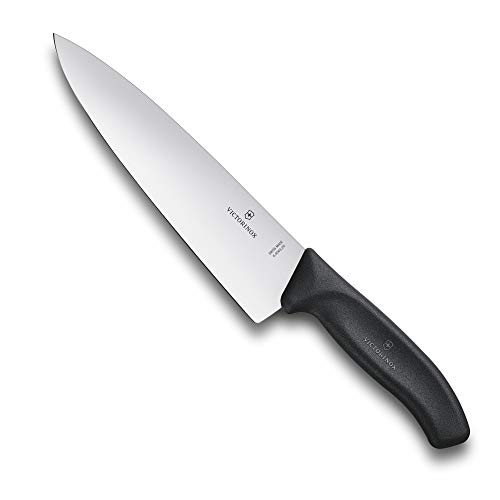
Best StarterVictorinox
Victorinox Fibrox Pro 8-Inch Chef Knife
In: Best Chef Knives for Beginners
- Stamped X55CrMo14 stainless steel at 56 HRC
- 15-degree factory edge per side
Your starting point for Chef's knives: research-backed roundups, honest reviews, and decision guides that cut through the marketing.
Standout picks from our best-of lists. Tap any product for features, pros and cons.
In: Best Chef Knives for Beginners
In: Best Chef Knives
In: Best Chef Knives Under $100
In: Best Chef Knives
In: Best Chef Knives for Beginners
In: Best Chef Knives for Beginners
In: Best Chef Knives Under $100
In: Best Chef Knives
Ranked shortlists for specific budgets and use cases. Start with the one that matches yours.
A chef's knife does 80% of kitchen cutting. Steel type, geometry, and handle comfort matter far more than brand prestige, and our guides explain how to keep it sharp, which matters most of all.
Below you'll find every Chef's knives article we've published, grouped by format. Roundups give you the shortlist; reviews go deep on single products; comparisons settle either-or decisions; guides teach you how to choose.
German steel (softer, ~56–58 HRC) is forgiving and easy to hone; Japanese steel (harder, 60+ HRC) holds an edge longer but chips more easily on bones and frozen food.
8 inches suits most hands and boards. A gentle curve rocks herbs; a flatter profile suits push-cutting.
This is personal, grip the knife in a pinch grip. Hotspots in the store become blisters at home.
Heavier knives do the work for you; lighter knives offer control. Balance at or just ahead of the bolster feels natural to most.
Every knife dulls. Budget for a honing rod (German steel) or whetstones (Japanese steel), a sharp $60 knife outperforms a dull $200 one.
Research-based picks from specs, independent reviews and owner feedback.
No paid placements, ever.
Our methodologyOne of our strongest picks is the Victorinox Fibrox Pro 8-Inch Chef Knife, a standout in our Best Chef Knives for Beginners list. The Wusthof Classic 8-Inch Chef Knife is another excellent choice.
Start with your main use and budget, then compare our shortlists: Best Chef Knives for Beginners, Best Chef Knives Under $100, Best Chef Knives in 2026.
German steel (softer, ~56–58 HRC) is forgiving and easy to hone; Japanese steel (harder, 60+ HRC) holds an edge longer but chips more easily on bones and frozen food.
A German chef knife at 56 to 58 HRC uses softer steel that resists chipping when you make the technique mistakes beginners inevitably make: twisting the blade laterally, cutting on a glass plate, prying apart frozen food, rocking into a bone. The wider edge angle is also forgiving of inconsistent honing technique. Once you have 6 to 12 months of cooking experience and understand how knife care works, you can decide whether the sharper, harder Japanese steel is worth its maintenance demands. Starting with a Japanese knife and chipping it in the first month is a common and expensive mistake.
It is long enough to handle every common home cooking task from mincing garlic to slicing a watermelon, and short enough to control comfortably on a standard cutting board. Beginners sometimes gravitate toward a 6-inch knife because it feels less intimidating, but 6 inches is genuinely too short for rocking through herbs or cutting through a cabbage in one pass. It will limit your technique rather than support it. A 10-inch knife adds leverage for large produce but demands more counter space and feels front-heavy to inexperienced hands.
Yes, and it is the single most important accessory you can buy alongside your knife. A ceramic or smooth steel honing rod costs 10 to 20 dollars and takes 30 seconds to use before each cooking session. It straightens the microscopic edge that folds over during use, which is the main reason a sharp knife stops feeling sharp. Without honing, even a premium knife will feel dull within days. With regular honing, a budget knife stays functional for weeks between true sharpenings. Buy the rod when you buy the knife.
A single 8-inch chef knife and a 3 to 4 inch paring knife. Block sets fill your counter with knives you will never reach for, and the money is distributed across 8 to 14 blades rather than concentrated in the one that matters. A chef knife handles 80 to 90 percent of all kitchen cutting tasks. A paring knife handles detail work like hulling strawberries and deveining shrimp. A serrated bread knife is worth adding later if you bake. Everything else in a block set sits in its slot.
The Victorinox Fibrox Pro at roughly 35 dollars has been the standard recommendation from professional chefs and kitchen publications for over a decade. The steel takes a good edge, the handle is comfortable and slip-resistant, and the blade geometry is sound. What a premium knife buys beyond this is longer edge retention, better handle materials, and refined balance. None of those prevent the Victorinox from producing excellent results. A sharp 35-dollar knife outperforms a dull 200-dollar knife every day, and the Victorinox sharpens faster and easier than most premium alternatives.