Best overallNutriBullet
NutriBullet 600W Compact Personal Blender
In: Best Blenders for Smoothies
- 600W motor
- 24-oz blending cup
Everything we publish about Blenders, best-of roundups, in-depth reviews, head-to-head comparisons, and plain-language buying guides.
Standout picks from our best-of lists. Tap any product for features, pros and cons.
In: Best Blenders for Smoothies
In: Best Blenders Under $100
In: Best Blenders
In: Best Blenders
In: Best Personal Blenders
In: Best Blenders for Smoothies
Ranked shortlists for specific budgets and use cases. Start with the one that matches yours.
Blenders range from $30 smoothie whisks to high-performance machines that replace a food processor. Power, jar design, and warranty separate the tiers, not just wattage numbers.
Below you'll find every Blenders article we've published, grouped by format. Roundups give you the shortlist; reviews go deep on single products; comparisons settle either-or decisions; guides teach you how to choose.
High-performance blenders (1400W+) crush ice and frozen fruit without stalling; they also carry longer warranties because the motors are built for it.
Wide, low jars make thick blends (nut butter, hummus) easier to tamp and pour; tall narrow jars vortex thin smoothies better.
Variable speed dials give more control than preset buttons for most tasks. Look for a tamper included with high-performance models.
Powerful blenders are loud, there's no way around physics, but some dampen better than others.
Self-cleaning cycles (water + drop of soap, 30–60 seconds) are standard on better models and genuinely work.
Research-based picks from specs, independent reviews and owner feedback.
No paid placements, ever.
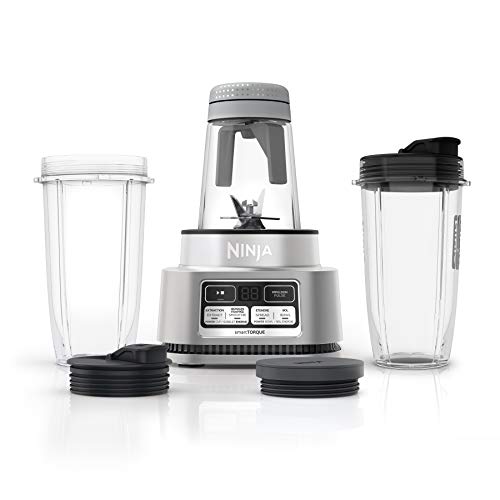
Our methodologyOne of our strongest picks is the NutriBullet 600W Compact Personal Blender, a standout in our Best Blenders for Smoothies list. The Ninja Professional Plus Blender BN701 72-oz is another excellent choice.
Start with your main use and budget, then compare our shortlists: Best Blenders for Smoothies, Best Blenders Under $100, Best Blenders.
High-performance blenders (1400W+) crush ice and frozen fruit without stalling; they also carry longer warranties because the motors are built for it.
Blade-to-container geometry: specifically how well the container shape creates a downward vortex that continuously pulls frozen fruit and leafy greens into the blade path without chunks escaping the cutting zone. A blender with poor vortex geometry leaves unblended chunks floating at the sides of the container regardless of how long it runs, a problem more apparent with frozen fruit and kale than with liquid-heavy blends. After vortex geometry: motor power (700W minimum for frozen fruit; 1,000W for reliable daily use without motor strain), blade sharpness and angle (flat vs angled blades produce different cutting profiles), and container width (wider containers require more RPM for the same blade tip speed).
30 to 60 seconds is the target blend time for a properly prepared smoothie in a well-designed blender. Preparation matters as much as blender power: add liquid to the container first (it creates the fluid vortex that pulls solids down), then add softer ingredients (fresh fruit, protein powder), then frozen ingredients on top. In a Vitamix: 45 seconds on Variable 10 produces consistently smooth results on any standard smoothie combination. In a Ninja at 1,000W: 45 to 60 seconds on max with occasional pulse to break up chunks. In a NutriBullet 600W: 30 to 45 seconds for pre-softened frozen fruit; 45 to 60 seconds for full-frozen. If a blend requires more than 90 seconds to reach smooth consistency: the blender is underpowered for the recipe, or the ingredient ratio (too much frozen, too little liquid) is causing the problem.
For daily use: dishwasher safety is a meaningful convenience factor. Blending frozen fruit leaves residue that adheres to the container walls and blade seal, rinsing immediately after use removes most of it, but a thorough wash requires either the dishwasher or hand scrubbing. Vitamix containers: top-rack dishwasher safe (though Vitamix recommends the self-cleaning method, blend warm water and a drop of dish soap for 30 to 60 seconds, then rinse). Ninja containers: dishwasher safe, blade assembly separate. NutriBullet cups: dishwasher safe on top rack without the blade. The daily workflow: immediate rinse after blending prevents residue hardening; run through the dishwasher every 2 to 3 days. Do not put the motor base, blade assemblies still attached, or any components with electronic seals in the dishwasher.
Dense, low-moisture ingredients create the most motor strain: raw nuts (almonds, cashews, peanuts without added liquid), thick nut butters, fibrous root vegetables without liquid (raw carrots, beets), fully frozen thick smoothie packs without enough liquid, and large quantities of ice cubes without liquid. Signs of motor strain: the motor slows or stops, the blender smells of ozone (electrical burning), or the base becomes very hot to the touch during blending. Most blenders have a thermal protection system that shuts the motor off if it overheats, the unit needs 10 to 15 minutes to cool before restarting. Prevention: always add adequate liquid first, keep ingredient volumes within the container's max fill line, and for demanding tasks (nut butters, thick blends) use a 1,400W+ blender.
Yes, with appropriate expectations. For a user who blends raw whole vegetables, nuts into butter, or hot soups: the Vitamix's performance gap is meaningful.