


Frigidaire
Frigidaire FFRS0822SE 8,000 BTU Slider/Casement Air Conditioner
In: Best Window Air Conditioners for Casement Windows
- Designed for slider and casement windows
- Remote and 24-hour timer
Your starting point for Window AC units: research-backed roundups, honest reviews, and decision guides that cut through the marketing.
Standout picks from our best-of lists. Tap any product for features, pros and cons.
In: Best Window Air Conditioners for Casement Windows
In: Best Window Air Conditioners for Large Living Rooms
In: Best Quiet Window Air Conditioners, Ranked by Decibel Rating
In: Best Window Air Conditioners Under $200
In: Best Window Air Conditioners for Casement Windows
In: Best Window Air Conditioners for Small Bedrooms
In: Best Window Air Conditioners Under $200
In: Best Window Air Conditioners for Casement Windows
Ranked shortlists for specific budgets and use cases. Start with the one that matches yours.
Window AC Units come in more varieties than most buyers expect, and the differences that matter rarely match the marketing. This library organizes our research so you can move from 'what should I get?' to a confident shortlist: start with a roundup for your use case, check the head-to-head comparisons for finalists, and skim the buying guides before you commit.
Use this page as mission control: pick the format that matches where you are, browsing, deciding between finalists, or learning the category from zero.
Measure your space and your actual use before falling for bigger-is-better. The right size is the one that fits your routine, not the spec sheet's maximum.
Heavier-gauge materials, tight tolerances, and solid joints outlast thin, rattly construction. In reviews, look for longevity comments over first-impression praise.
Clear instructions, intuitive controls, and minimal assembly separate daily drivers from garage ornaments.
Whatever you buy will need cleaning. Removable, dishwasher-safe, or wipe-clean parts get maintained; fiddly ones get neglected.
A multi-year warranty signals the manufacturer expects it to last. Check what's actually covered, motors and frames matter more than accessories.
Research-based picks from specs, independent reviews and owner feedback.
No paid placements, ever.
Our methodologyOne of our strongest picks is the Frigidaire FFRS0822SE 8,000 BTU Slider/Casement Air Conditioner, a standout in our Best Window Air Conditioners for Casement Windows list. The GE Profile ClearView 8,300 BTU Smart Window Air Conditioner AHTT08BC is another excellent choice.
Start with your main use and budget, then compare our shortlists: Best Window Air Conditioners for Casement Windows, Best Window Air Conditioners for Large Living Rooms, Best Quiet Window Air Conditioners, Ranked by Decibel Rating.
Measure your space and your actual use before falling for bigger-is-better. The right size is the one that fits your routine, not the spec sheet's maximum.
No, not without a custom-built frame. Standard window air conditioners are designed to slide into a horizontal opening created by pushing up a double-hung or single-hung sash, with side panels that extend to fill the remaining gap. A casement window cranks outward on a hinge and has no sliding sash, so there's no standard opening for a unit to sit in or seal against.
A portable air conditioner with a casement window installation kit is the standard workaround. The kit replaces the vent hose's flat window-slider panel with a version that fits in the narrower gap created by cranking the casement window partly open, sealing around the hose rather than requiring a sliding sash.
Reasonably well, though not as tightly as a true double-hung installation. The kit typically uses foam or plastic panel inserts cut to the crank-open gap, plus tape or weatherstripping around the edges. Expect a small amount of additional air leakage compared to a standard window AC installation, which is a minor efficiency tradeoff worth accepting given the alternative is no cooling at all.
Only if you're already planning a window replacement for other reasons. Swapping a casement for a single-hung or double-hung window solely to fit a window air conditioner is a significant cost. For most households, a portable AC with a casement kit is far more practical, and a ductless mini-split condenser mounted outside is the better long-term option if the room is a permanent living space.
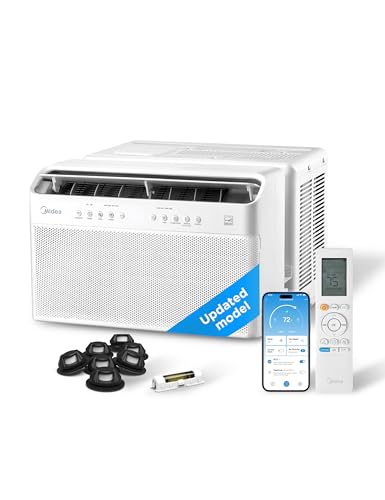
For an open living room between 300 and 350 sq ft, an 8,000 to 8,300 BTU unit like the ones in this list is typically sufficient. For anything larger, or an open-concept space that connects to a kitchen or dining area, look at the 12,000 BTU version of the same product lines, such as the Midea 12,000 BTU U-Shaped or the GE Profile ClearView 12,200 BTU inverter model.


