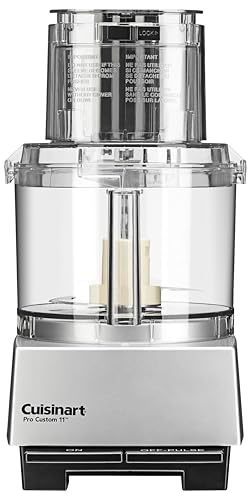
What earns it a place here: the most widely owned and recipe-referenced food processor in the category, with 22,000 ratings and 1,200W motor and 14-cup bowl handle full-size batch cooking without bogging. Keep in mind that no variable speed, pulse and continuous only.
14-cup polycarbonate bowl with 1,200-watt motor
Die-cast metal base for stability under heavy loads
Extra-large feed tube fits a whole medium potato
Includes stainless S-blade, slicing disc, and shredding disc
3-year limited warranty with 20+ years of parts availability
Pros
The most widely owned and recipe-referenced food processor in the category, with 22,000 ratings
1,200W motor and 14-cup bowl handle full-size batch cooking without bogging
Extra-large feed tube eliminates most pre-cutting for whole vegetables
Cuisinart's decades-long parts availability means it stays serviceable for 10 to 15 years
3-disc set covers chopping, slicing, and shredding out of the box
Cons
No variable speed, pulse and continuous only
One slicing thickness, no on-the-fly adjustment
No mini bowl for small-batch tasks like garlic or herbs
Prices and availability change, so confirm on Amazon.
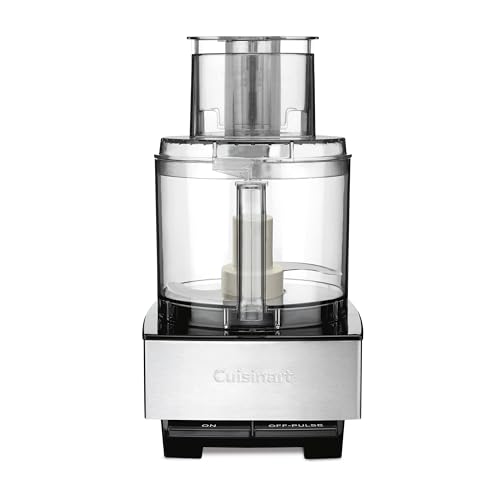
What earns it a place here: same Cuisinart motor platform as the 14-cup, sized appropriately for 2 to 4-person households and 720W handles root vegetables and dough without the strain budget motors show. Keep in mind that 11-cup bowl is limiting for households batch cooking for 5 or more people.
11-cup work bowl with 720-watt motor
Includes stainless S-blade, slicing disc, and shredding disc
Die-cast metal base for stability
Large feed tube for whole medium vegetables
3-year limited warranty
Pros
Same Cuisinart motor platform as the 14-cup, sized appropriately for 2 to 4-person households
720W handles root vegetables and dough without the strain budget motors show
Smaller footprint than the 14-cup for kitchens that don't need full-size capacity
Cons
11-cup bowl is limiting for households batch cooking for 5 or more people
No mini bowl for small-batch tasks
One slicing thickness, no adjustment
No variable speed, pulse and continuous only
Prices and availability change, so confirm on Amazon.
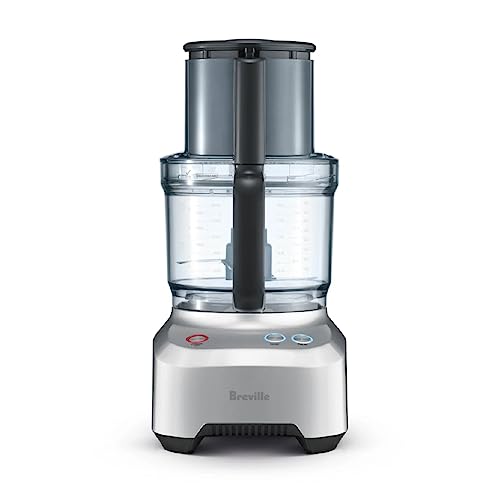
What earns it a place here: 1,000W motor and precise speed dial outperform fixed pulse-and-on competitors on control and wider feed tube than the Cuisinart 14-cup reduces pre-cutting on large vegetables.
12-cup bowl with 1,000-watt motor
Wide feed tube for whole vegetables
Precise electronic speed dial rather than fixed pulse/on
Includes S-blade, adjustable slicing disc, shredding disc, and dough blade
Die-cast metal construction
Pros
1,000W motor and precise speed dial outperform fixed pulse-and-on competitors on control
Wider feed tube than the Cuisinart 14-cup reduces pre-cutting on large vegetables
Adjustable slicing disc covers a range of thicknesses the Cuisinart's fixed disc cannot
Premium build quality with a smoother, quieter motor than budget and mid-range models
Cons
Smaller review base (4,800 ratings) means less long-term reliability data
No nested mini bowl, unlike the Breville Sous Chef 16-cup
Bulkier housing than the Cuisinart mid-size options
Prices and availability change, so confirm on Amazon.
4 stars, the most-reviewed budget processor in this roundup and adequate for households processing vegetables and dips a few times a week. Keep in mind that 450W motor requires cooling breaks on sustained 3+ minute runs.
10-cup work bowl with 450-watt motor
Includes slicing disc and shredding disc
Simple pulse and continuous controls
Dishwasher-safe bowl, lid, blade, and discs
Compact stacking storage design
Pros
18,000 ratings at 4.4 stars, the most-reviewed budget processor in this roundup
Adequate for households processing vegetables and dips a few times a week
Wide retail availability and easy parts replacement
Cons
450W motor requires cooling breaks on sustained 3+ minute runs
Blade dulls faster than Cuisinart stainless over 12 to 18 months
No variable speed, pulse and continuous only
Bowl seal can develop play over time, occasionally leaking on liquid-heavy recipes
Prices and availability change, so confirm on Amazon.
What earns it a place here: 12-cup capacity at a competitive price with both discs included and gE's appliance warranty and customer service network back an otherwise niche entry. Keep in mind that smaller review base (5,200 ratings) than Cuisinart or Hamilton Beach.
12-cup work bowl with a mid-power motor
Includes slicing disc and shredding disc
Simple pulse and continuous controls
Dishwasher-safe bowl, lid, blade, and discs
Compact stacking storage for bowl and accessories
Pros
12-cup capacity at a competitive price with both discs included
GE's appliance warranty and customer service network back an otherwise niche entry
Adequate for households processing vegetables and dips a few times per week
Straightforward, uncomplicated control layout
Cons
Smaller review base (5,200 ratings) than Cuisinart or Hamilton Beach
Motor lacks the sustained torque of Cuisinart or Ninja
Plastic components feel less solid than the premium picks
Blade durability trails stainless Cuisinart equivalents over years of use
Prices and availability change, so confirm on Amazon.
What earns it a place here: full Cuisinart motor and blade quality at the lowest price point in the Cuisinart lineup and auto-reversing blade produces both coarse chop and fine mince from one blade. Keep in mind that 4-cup bowl is too small for dips serving more than 2 people.
4-cup work bowl with stainless steel chopping blade
Auto-reversing blade action for coarse or fine chop
Two-touch pulse and continuous-on control
Compact 5.25 x 5.75 x 8.5-inch housing
Dishwasher-safe bowl, lid, and blade
Pros
Full Cuisinart motor and blade quality at the lowest price point in the Cuisinart lineup
Auto-reversing blade produces both coarse chop and fine mince from one blade
Ideal for single-serving hummus, herbs, garlic, and small salsa batches
Cons
4-cup bowl is too small for dips serving more than 2 people
No slicing or shredding discs, S-blade only
Not built for dough or continuous multi-minute processing
Two speed settings only, no variable control
Prices and availability change, so confirm on Amazon.
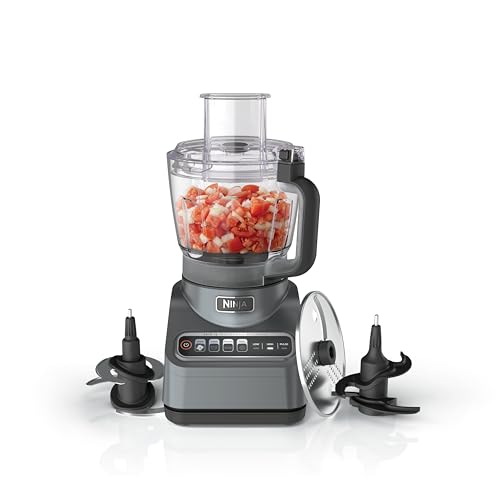
What earns it a place here: 1,000W motor rivals premium Cuisinart and Breville models at a fraction of the price and handles dough and harder vegetables noticeably better than Hamilton Beach or Black+Decker. Keep in mind that louder at full speed than mid-power competitors.
9-cup work bowl with 1,000-watt motor
Auto-iQ preset programs for one-touch chop and puree
Includes reversible slicing/shredding disc and dough blade
Dishwasher-safe bowl, lid, blade, and disc
Compact footprint relative to its 9-cup capacity
Pros
1,000W motor rivals premium Cuisinart and Breville models at a fraction of the price
Handles dough and harder vegetables noticeably better than Hamilton Beach or Black+Decker
Auto-iQ presets remove guesswork on chop and puree consistency
9-cup capacity plus dough blade covers a wide range of tasks for the price
Cons
Louder at full speed than mid-power competitors
Auto-iQ programs limit manual pulse control for cooks who prefer to judge texture themselves
Fewer discs included than the Breville or Cuisinart 14-cup
Newer to the market than Cuisinart, with a shorter long-term reliability track record
Prices and availability change, so confirm on Amazon.
What earns it a place here: a step up in build finish from the FP-11GW Elemental at a similar 11-cup capacity and cuisinart's 3-disc set covers chopping, slicing, and shredding out of the box. Keep in mind that no mini bowl for small-batch tasks like garlic or herbs.
11-cup work bowl with 625-watt motor
Includes stainless S-blade, slicing disc, and shredding disc
Die-cast metal base for stability
Large feed tube for whole medium vegetables
3-year limited warranty
Pros
A step up in build finish from the FP-11GW Elemental at a similar 11-cup capacity
Cuisinart's 3-disc set covers chopping, slicing, and shredding out of the box
Die-cast base and Cuisinart's decades-long parts availability outlast most budget competitors
Handles dough and root vegetables more consistently than Hamilton Beach or Black+Decker
Cons
No mini bowl for small-batch tasks like garlic or herbs
One slicing thickness, no on-the-fly adjustment
No variable speed, pulse and continuous only
Prices and availability change, so confirm on Amazon.
What earns it a place here: exactSlice external lever adjusts slicing thickness mid-run without lifting the lid and bowl-in-bowl system includes a 4-cup mini bowl standard, no separate purchase needed. Keep in mind that 1,000W motor vs Cuisinart's 1,200W, slows noticeably on sustained dense dough.
1,000W motor with ExactSlice external thickness control
Bowl-in-bowl design: 13-cup main bowl plus 4-cup mini bowl
3.5-inch wide feed tube fits whole onions and large tomatoes
Includes S-blade, slicing disc, shredding disc, and dough blade
Dedicated dough scraper tool included
3-year limited warranty
Pros
ExactSlice external lever adjusts slicing thickness mid-run without lifting the lid
Bowl-in-bowl system includes a 4-cup mini bowl standard, no separate purchase needed
Dough scraper tool included for lifting soft doughs cleanly from the bowl
Brand-consistent styling for households with other KitchenAid appliances
Cons
1,000W motor vs Cuisinart's 1,200W, slows noticeably on sustained dense dough
3,600 rated reviews vs Cuisinart's 22,000, far less community documentation
Smaller aftermarket parts ecosystem than Cuisinart's long-running DFP line
Prices and availability change, so confirm on Amazon.
What earns it a place here: stack and Snap system is the fastest assembly and cleanup of any processor in this roundup and adequate power for chopping, dips, and shredding 1 to 3 times per week without strain. Keep in mind that 450W motor requires 1 to 2 minute cooling breaks on sustained 3+ minute runs.
12-cup work bowl with 450-watt motor
Stack and Snap assembly, blade locks into the lid for one-handed setup
Includes slicing disc and shredding disc
Bowl-and-blade stacking system for compact storage
Dishwasher-safe bowl, lid, blade, and discs
Pros
Stack and Snap system is the fastest assembly and cleanup of any processor in this roundup
Adequate power for chopping, dips, and shredding 1 to 3 times per week without strain
Wide brand support and easy parts replacement through Hamilton Beach
Cons
450W motor requires 1 to 2 minute cooling breaks on sustained 3+ minute runs
Blade dulls faster than premium Cuisinart stainless over 12 to 18 months
No variable speed, pulse and continuous only
Motor and build quality clearly trail the Cuisinart and Breville picks above it
Prices and availability change, so confirm on Amazon.
5-cup work bowl with a powerful direct-drive motor (compact professional design) and Patented blade assembly with an adjustable safety-release system. Keep in mind that smallest bowl capacity of any full-size processor in this roundup relative to its price.
3.5-cup work bowl with a powerful direct-drive motor (compact professional design)
Patented blade assembly with an adjustable safety-release system
Includes S-blade, slicing disc, shredding disc, and citrus press attachment
Commercial-grade construction built for restaurant use, sold for home kitchens
30-year motor guarantee, the longest in the food processor category
Pros
Direct-drive motor with no belt or gears delivers restaurant-grade torque and consistency
30-year motor guarantee reflects genuinely different build quality than any consumer brand here
Patented blade system produces finer, more even chops than standard S-blades
Long-standing reputation among professional chefs for reliability under continuous use
Cons
Smallest bowl capacity of any full-size processor in this roundup relative to its price
Significantly more expensive than Cuisinart or Breville at comparable capacity
Smaller review base (2,800 ratings) reflects a niche, professional-leaning customer base
Design and interface feel dated compared to modern consumer food processors
Prices and availability change, so confirm on Amazon.
This shortlist is the product of research, not advertising. We cross-checked manufacturer specs against independent reviews and long-term owner feedback, then ranked by value for real use cases.
Mistakes buyers often make
Buying on brand name alone instead of matching features to your actual use case.
Overpaying for headline specs you'll never use, define must-haves first.
Ignoring size, compatibility, and ongoing costs (filters, accessories, refills).
Trusting star ratings without reading what owners complain about after 6 months.
How we chose these picks
We started from manufacturer specifications and feature lists, the verifiable foundation.
We weighed reputable independent reviews from established tech and consumer publications.
We read large volumes of verified-owner feedback to find patterns in reliability and satisfaction.
We scored value: what you get for the price, not just absolute performance.
We excluded products with thin, suspicious, or heavily incentivized review profiles.
We don't claim hands-on testing we haven't done. Assessments synthesize manufacturer specifications, reputable independent reviews and documented owner feedback. Read our methodology.
Before you buy
Buying guide
How to choose: the factors that matter
Capacity and sizing, Measure your space and your actual use before falling for bigger-is-better. The right size is the one that fits your routine, not the spec sheet's maximum.
Build quality and materials, Heavier-gauge materials, tight tolerances, and solid joints outlast thin, rattly construction. In reviews, look for longevity comments over first-impression praise.
Ease of use and setup, Clear instructions, intuitive controls, and minimal assembly separate daily drivers from garage ornaments.
Maintenance and cleaning, Whatever you buy will need cleaning. Removable, dishwasher-safe, or wipe-clean parts get maintained; fiddly ones get neglected.
Warranty and support, A multi-year warranty signals the manufacturer expects it to last. Check what's actually covered, motors and frames matter more than accessories.
The bottom line
If you want the short answer: the top pick above suits most buyers, the value pick suits tight budgets, and the specialist picks suit specific needs. Match the pick to your use case, not to the hype.
Answers
Frequently asked questions
What are the best food processors right now?
Our top pick is the Cuisinart DFP-14BCWNYAMZ 14-Cup Food Processor (best overall), because the most widely owned and recipe-referenced food processor in the category, with 22,000 ratings. The runner-up is the Cuisinart FP-11GW Elemental 11-Cup Food Processor, followed by the Breville BFP660SIL Sous Chef 12-Cup Food Processor.
Is the Cuisinart DFP-14BCWNYAMZ 14-Cup Food Processor worth it?
For most buyers, yes. It ranks #1 in our food processors research, though no variable speed, pulse and continuous only.
What size food processor do I need?
Cup rating refers to the bowl's volume. 3 to 5-cup: mini food processor, appropriate for small tasks, chopping herbs, making small batches of salsa, mincing garlic. 7 to 9-cup: medium food processor, appropriate for 2 to 4-person households, hummus, dips, chopping vegetables for one meal, pesto. 11 to 14-cup: full-size food processor, appropriate for 4 to 6-person households, full batches of dough, shredding a full head of cabbage, slicing 5 pounds of potatoes. Most cookbook recipes and cooking show demonstrations assume a 9 to 11-cup model. For a single person: a 7-cup handles 90% of use cases. For a family of 4 or anyone batch cooking: the 11-cup is the baseline.
What is the difference between a food processor and a blender?
A food processor uses a wide, shallow work bowl with a flat blade at the base and interchangeable disc attachments for slicing and shredding. It processes food at low RPM with high torque, creating coarse or precise cuts depending on pulse duration, the user controls texture. A blender uses a tall narrow container with a high-RPM blade designed to create a vortex and produce smooth, liquid, or near-liquid results. Food processors cannot make smooth soups or smoothies; blenders cannot slice vegetables or knead dough. The two appliances are complementary, not interchangeable. Households that cook regularly typically benefit from both. For a single appliance: choose based on whether smooth pureed results (blender) or chopped/sliced textured results (food processor) are more frequently needed.
What attachments should a food processor include?
Essential attachments that should be standard on any full-size food processor: standard S-shaped chopping blade (for chopping, pureeing, dough), slicing disc (for uniform vegetable slices), shredding disc (for cheese, carrots, cabbage). These three cover 90% of food processor tasks. Useful additions: dough blade (gentler kneading than the S-blade, appropriate for bread and pizza dough), julienne disc (julienne cuts for stir fry), thin-slice disc (for chips and mandoline-style slices). Less essential: whisk attachment (a stand mixer handles whipping better), citrus juicer attachment (a hand citrus press is faster and easier to clean). When comparing food processors: confirm all three essential attachments are included, some manufacturers sell them separately.
What is the best food processor for making hummus?
Any food processor with a full-size S-blade and at least 7-cup capacity makes excellent hummus. The Cuisinart DFP-14BCWNYAMZ 14-cup, Cuisinart FP-11GW Elemental 11-cup, and Breville BFP660SIL Sous Chef are the most recommended for smooth hummus because: their wider bowl distributes the chickpeas evenly around the blade, the longer processing time produces silky texture without overheating (the motor handles continuous operation better than budget models), and the sealed lid allows adding olive oil in a stream through the feed tube while processing. Critical technique for smooth hummus regardless of food processor: peel the chickpeas (rub between two towels after cooking) and process for a full 4 minutes with olive oil, lemon, and tahini before checking consistency.