
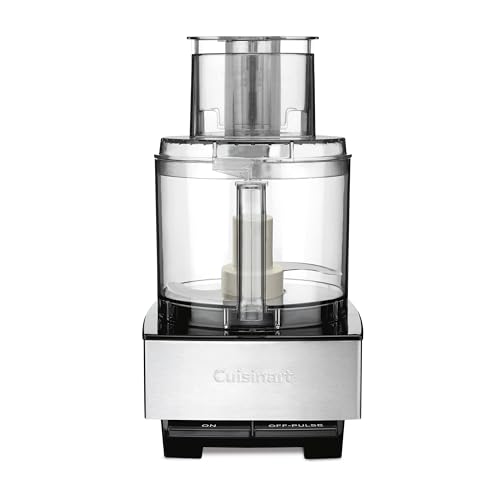
Top pickCuisinart
Cuisinart Mini-Prep Plus 4-Cup Food Processor DLC-2ABCY
- 4-cup work bowl, compact 5.25 x 5.75 x 8.5-inch footprint
- Stainless steel chopping blade with auto-reversing action for coarse or fine chop
Everything you need to know about how to choose a food processor: a step-by-step decision guide, explained plainly.
Count the number of people in your household and how often you cook in batches. 1 to 2 people, light cooking: 4 to 7-cup bowl handles herbs, garlic, small dips, and single-meal vegetable prep.
The decision tree for choosing a food processor has four branchpoints. Work through all four before selecting a model.
Best Food Processors: Top Picks for Chopping, Slicing, and PureeingFood Processors · List Best Food Processors for Small Kitchens: Compact Picks That Don't CompromiseFood Processors · List
The decision tree for choosing a food processor has four branchpoints.
Work through all four before selecting a model.
Count your household size and typical cooking quantity.
Mini (4-cup) for one person doing small tasks.
7-cup for one to two people cooking regularly.
A bowl-within-bowl design (also called nested bowl or mini bowl insert) includes a smaller 4 to 5-cup bowl that fits inside the main bowl, allowing small tasks without using the full large bowl. This is most useful when: you have a 14-cup full-size processor but frequently make small batches (mincing garlic, making 1-cup of salsa, processing one onion). Without the mini bowl insert, a small amount of food in a large bowl has poor blade contact and poor processing results because the food spreads thin across the wide bowl floor. The Cuisinart DFP-14BCWN and Breville BFP660SIL both include mini-bowl inserts. If you regularly alternate between large and small tasks in the same session: the bowl-within-bowl design is worth paying for.
For most households: no. Digital displays on food processors typically show the selected function (chop, slice, puree) and processing time. In practice: a food processor is operated by watching the food in the bowl and stopping when the desired texture is reached, a timer is rarely the determining factor. The more useful interface feature is the pulse button, not a digital display. The Cuisinart DFP-14BCWN's simple dial and push-button interface with pulse is more practical for moment-to-moment texture control than a digital display model at the same price. Invest the price premium in more motor wattage or bowl capacity rather than a display.
Measure the clearance between your counter surface and the bottom of your upper cabinets. Standard kitchen clearance is 15 to 18 inches. The food processor must fit under the clearance with the lid on AND allow the lid to come off for loading, the lid typically adds 1 to 2 inches of height when being lifted. Compact 4 to 7-cup processors: 8 to 14 inches tall, fit under standard clearance. Mid-size 9 to 11-cup processors: 13 to 16 inches tall, fit in 18-inch clearance, borderline in 15-inch. Full-size 14-cup processors: 15 to 18 inches tall, may require storing the lid separately under standard clearance. Before purchasing: measure and add 3 inches for lid removal to the processor's listed height.
For meal prep: the Cuisinart DFP-14BCWN 14-cup is the standard recommendation, its 1,200W motor, wide feed tube, and 14-cup bowl handle sustained batch processing better than any food processor in its price class.

