
Skip to content
BuyOnceRight: buy once, buy right
Ergonomic Keyboards · Best picks

Best Ergonomic Keyboards Under $100: 10 Picks That Save Your Wrists

Our research-backed shortlist of the 10 best Ergonomic keyboards for 2026, what each pick does well, where it falls short, and who should buy it.

On this page

Our top picks

Short on time? Our top recommendation is the Logitech Ergo K860 Wireless Ergonomic Split Keyboard (best overall). Here's how the shortlist breaks down.

  1. Logitech Ergo K860 Wireless Ergonomic Split Keyboard

    #1 · Best Overall

    Logitech Ergo K860 Wireless Ergonomic Split Keyboard

    Combines split angle, palm rest, and tenting in one unit, the combination that reduces strain most effectively

  2. Microsoft Sculpt Ergonomic Keyboard for Business

    #2 · Best Value

    Microsoft Sculpt Ergonomic Keyboard for Business

    At 45-60 dollars it is the cheapest genuinely ergonomic keyboard worth buying

  3. Perixx Periboard-512B Ergonomic Split Keyboard

    #3

    Perixx Periboard-512B Ergonomic Split Keyboard

    Under 40 dollars delivers the essential split layout and integrated palm rest, genuine ergonomic benefit at minimal cost

  4. Microsoft Ergonomic Keyboard (LXM-00004)

    #4

    Microsoft Ergonomic Keyboard (LXM-00004)

    More conventional key layout than the Sculpt reduces adjustment time

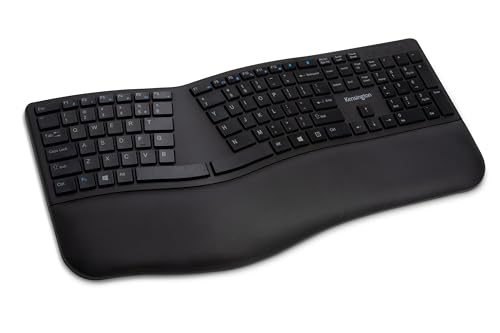
  5. Kensington Pro Fit Ergonomic Wireless Keyboard

    #5

    Kensington Pro Fit Ergonomic Wireless Keyboard

    Subtle splay suits users who want moderate ergonomic benefit without a dramatic layout change

  6. Goldtouch V2 Adjustable Comfort Keyboard

    #6

    Goldtouch V2 Adjustable Comfort Keyboard

    Independent adjustability of splay and tenting is the standout feature at this price

  7. Logitech Wave Keys Wireless Ergonomic Keyboard

    #7

    Logitech Wave Keys Wireless Ergonomic Keyboard

    Wave-shaped key bed guides fingers into a natural arc with almost no adjustment period

  8. Kinesis Advantage2 Quiet LF Mechanical Ergonomic Keyboard

    #8

    Kinesis Advantage2 Quiet LF Mechanical Ergonomic Keyboard

    The most aggressive ergonomic layout in this roundup, contoured wells and thumb cluster eliminate finger stretching entirely

  9. Adesso Tru-Form Media Contoured Ergonomic Keyboard

    #9

    Adesso Tru-Form Media Contoured Ergonomic Keyboard

    Built-in touchpad removes the keyboard-to-mouse reach that adds to shoulder strain

  10. Perixx Periboard-613B Wireless Ergonomic Split Keyboard

    #10

    Perixx Periboard-613B Wireless Ergonomic Split Keyboard

    Cable-free version of a proven budget split layout

Jump to the full breakdowns
Compare

At a glance

The specs and traits that separate these picks, side by side.

How to read this table
Why it stands out: its biggest strength
Keep in mind: the main trade-off
Best for: the buyer it suits
Comparison: Best Ergonomic Keyboards Under $100: 10 Picks That Save Your Wrists
PickWhy it stands outKeep in mindBest forPrice
Logitech Ergo K860 Wireless Ergonomic Split Keyboard product photo
Logitech Ergo K860 Wireless Ergonomic Split Keyboard
Combines split angle, palm rest, and tenting in one unit, the combination that reduces strain most effectivelyRegularly sells for 100-130 dollars, only occasionally dropping under 100 during salesbuyers who want the best overall packageCheck price
Microsoft Sculpt Ergonomic Keyboard for Business product photo
Microsoft Sculpt Ergonomic Keyboard for Business
At 45-60 dollars it is the cheapest genuinely ergonomic keyboard worth buyingProprietary dongle is factory-paired; losing it means replacing the entire keyboardvalue-focused buyers who want the most for their moneyCheck price
Perixx Periboard-512B Ergonomic Split Keyboard product photo
Perixx Periboard-512B Ergonomic Split Keyboard
Under 40 dollars delivers the essential split layout and integrated palm rest, genuine ergonomic benefit at minimal costKey feel is mushy compared to the K860 or Sculptmost buyers in this categoryCheck price
Microsoft Ergonomic Keyboard (LXM-00004) product photo
Microsoft Ergonomic Keyboard (LXM-00004)
More conventional key layout than the Sculpt reduces adjustment timeNo tenting or adjustable splay anglemost buyers in this categoryCheck price
Kensington Pro Fit Ergonomic Wireless Keyboard product photo
Kensington Pro Fit Ergonomic Wireless Keyboard
Subtle splay suits users who want moderate ergonomic benefit without a dramatic layout changeModest splay means less ulnar deviation relief than the K860 or Freestyle2most buyers in this categoryCheck price
Goldtouch V2 Adjustable Comfort Keyboard product photo
Goldtouch V2 Adjustable Comfort Keyboard
Independent adjustability of splay and tenting is the standout feature at this priceWired only, no wirelessmost buyers in this categoryCheck price
Logitech Wave Keys Wireless Ergonomic Keyboard product photo
Logitech Wave Keys Wireless Ergonomic Keyboard
Wave-shaped key bed guides fingers into a natural arc with almost no adjustment periodLess aggressive curve delivers less ulnar deviation relief than a true splitmost buyers in this categoryCheck price
Kinesis Advantage2 Quiet LF Mechanical Ergonomic Keyboard product photo
Kinesis Advantage2 Quiet LF Mechanical Ergonomic Keyboard
The most aggressive ergonomic layout in this roundup, contoured wells and thumb cluster eliminate finger stretching entirelyConcave key wells take noticeably longer to adjust to than a flat split boardmost buyers in this categoryCheck price
Adesso Tru-Form Media Contoured Ergonomic Keyboard product photo
Adesso Tru-Form Media Contoured Ergonomic Keyboard
Built-in touchpad removes the keyboard-to-mouse reach that adds to shoulder strainBuilt-in touchpad is far less precise than a dedicated mousemost buyers in this categoryCheck price
Perixx Periboard-613B Wireless Ergonomic Split Keyboard product photo
Perixx Periboard-613B Wireless Ergonomic Split Keyboard
Cable-free version of a proven budget split layoutBluetooth pairing occasionally drops or lags compared to a wired connectionmost buyers in this categoryCheck price
In depth

The 10 best ergonomic keyboards, explained

Why each made the cut, where it falls short, and who it suits best.

Logitech Ergo K860 Wireless Ergonomic Split Keyboard
Best Overall

1. Logitech Ergo K860 Wireless Ergonomic Split Keyboard

Logitech

It stands out for combines split angle, palm rest, and tenting in one unit, the combination that reduces strain most effectively and most typists adjust within a week, the shortest curve of any split board in this roundup. The tradeoff: regularly sells for 100-130 dollars, only occasionally dropping under 100 during sales.

  • 9-degree fixed splay with curved split key groups
  • Integrated memory foam palm rest
  • Adjustable tenting legs for negative tilt
  • Bluetooth multi-device switching across 3 computers plus Unifying receiver
  • 2-year battery life on 2 AAA batteries

Pros

  • Combines split angle, palm rest, and tenting in one unit, the combination that reduces strain most effectively
  • Most typists adjust within a week, the shortest curve of any split board in this roundup
  • One-button Bluetooth switching between 3 paired computers
  • 2 years of battery life per AAA set eliminates recurring charging

Cons

  • Regularly sells for 100-130 dollars, only occasionally dropping under 100 during sales
  • Membrane switches lack the tactile break of mechanical keyboards
  • Full-size layout with number pad takes up more desk space than compact options
  • Palm rest is fixed to the chassis and can't be angled independently

Best for: buyers who want the best overall package

Microsoft Sculpt Ergonomic Keyboard for Business
Best Value

2. Microsoft Sculpt Ergonomic Keyboard for Business

Microsoft

It stands out for at 45-60 dollars it is the cheapest genuinely ergonomic keyboard worth buying and dome design has reduced ulnar deviation for over a decade with a proven track record. The tradeoff: proprietary dongle is factory-paired; losing it means replacing the entire keyboard.

  • Dome-shaped split key bed with detached number pad
  • Cushioned detachable palm rest
  • Proprietary wireless dongle paired at the factory
  • Compact footprint keeps mouse close to centerline

Pros

  • At 45-60 dollars it is the cheapest genuinely ergonomic keyboard worth buying
  • Dome design has reduced ulnar deviation for over a decade with a proven track record
  • Detached number pad saves desk space and keeps the mouse closer to centerline
  • Cushioned palm rest positions wrists comfortably without extra purchases

Cons

  • Proprietary dongle is factory-paired; losing it means replacing the entire keyboard
  • No tenting adjustment, the dome angle is fixed
  • Detached number pad is an extra piece to manage on the desk
  • Membrane switches have limited travel and feel low-effort over long sessions

Best for: value-focused buyers who want the most for their money

Perixx Periboard-512B Ergonomic Split Keyboard

3. Perixx Periboard-512B Ergonomic Split Keyboard

Perixx

It stands out for under 40 dollars delivers the essential split layout and integrated palm rest, genuine ergonomic benefit at minimal cost and wired connection with no battery or pairing to manage. The tradeoff: key feel is mushy compared to the K860 or Sculpt.

  • Wired USB split layout under 40 dollars
  • Integrated palm rest
  • Fixed splay angle
  • Basic membrane switches

Pros

  • Under 40 dollars delivers the essential split layout and integrated palm rest, genuine ergonomic benefit at minimal cost
  • Wired connection with no battery or pairing to manage
  • Solid entry point for testing whether a split layout works before spending more
  • Widely available and simple to set up with no software

Cons

  • Key feel is mushy compared to the K860 or Sculpt
  • Build quality is basic and plastic panels flex under pressure
  • No tenting or wireless option
  • Palm rest padding is thin compared to premium options

Prices and availability change, so confirm on Amazon.

Microsoft Ergonomic Keyboard (LXM-00004)

4. Microsoft Ergonomic Keyboard (LXM-00004)

Microsoft

It stands out for more conventional key layout than the Sculpt reduces adjustment time and wired USB eliminates any dongle-loss risk. The tradeoff: no tenting or adjustable splay angle.

  • Wired USB split layout with cushioned palm rest
  • Conventional key layout for a shorter adjustment period
  • No dongle, eliminates the Sculpt's pairing concern
  • Simple plug-and-type setup

Pros

  • More conventional key layout than the Sculpt reduces adjustment time
  • Wired USB eliminates any dongle-loss risk
  • Cushioned palm rest is integrated, not a separate purchase
  • Simple, no-software setup that just works out of the box

Cons

  • No tenting or adjustable splay angle
  • Wired only, no wireless option
  • Splay is modest compared to fully split boards, limited shoulder benefit
  • Key feel is unremarkable membrane, no standout tactility

Prices and availability change, so confirm on Amazon.

Kensington Pro Fit Ergonomic Wireless Keyboard

5. Kensington Pro Fit Ergonomic Wireless Keyboard

Kensington

It stands out for subtle splay suits users who want moderate ergonomic benefit without a dramatic layout change and quiet keys and low profile make it unobtrusive in shared offices. The tradeoff: modest splay means less ulnar deviation relief than the K860 or Freestyle2.

  • Wireless split keyboard with subtle splay
  • Quiet, low-profile key switches
  • 2.4GHz wireless receiver
  • Office-friendly compact design

Pros

  • Subtle splay suits users who want moderate ergonomic benefit without a dramatic layout change
  • Quiet keys and low profile make it unobtrusive in shared offices
  • Reliable 2.4GHz wireless connection with minimal lag
  • Comfortable for users transitioning from a flat keyboard

Cons

  • Modest splay means less ulnar deviation relief than the K860 or Freestyle2
  • No tenting legs included
  • Palm support is thinner than integrated-foam competitors
  • Shorter battery life than AAA-powered alternatives

Prices and availability change, so confirm on Amazon.

Goldtouch V2 Adjustable Comfort Keyboard

6. Goldtouch V2 Adjustable Comfort Keyboard

Goldtouch

It stands out for independent adjustability of splay and tenting is the standout feature at this price and addresses both ulnar deviation and pronation, most sub-60-dollar boards lock the splay angle and skip pronation entirely. The tradeoff: wired only, no wireless.

  • Independently rotating halves, up to 30 degrees each
  • Independent tenting per half
  • Wired USB connection
  • Compact modular halves

Pros

  • Independent adjustability of splay and tenting is the standout feature at this price
  • Addresses both ulnar deviation and pronation, most sub-60-dollar boards lock the splay angle and skip pronation entirely
  • Compact modular halves take up less desk space than a tethered fully split board
  • Durable build for a budget adjustable keyboard

Cons

  • Wired only, no wireless
  • Finding the right angle takes trial and error, more fiddly setup than fixed-splay boards
  • No integrated palm rest included
  • Membrane switches feel plasticky under sustained typing

Prices and availability change, so confirm on Amazon.

Logitech Wave Keys Wireless Ergonomic Keyboard

7. Logitech Wave Keys Wireless Ergonomic Keyboard

Logitech

It stands out for wave-shaped key bed guides fingers into a natural arc with almost no adjustment period and easier to adjust to than the K860's more aggressive splay. The tradeoff: less aggressive curve delivers less ulnar deviation relief than a true split.

  • Gentle wave-shaped key bed, not a full split
  • Integrated palm rest
  • Bluetooth and Logitech Unifying receiver connectivity
  • Quiet membrane switches

Pros

  • Wave-shaped key bed guides fingers into a natural arc with almost no adjustment period
  • Easier to adjust to than the K860's more aggressive splay
  • Integrated palm rest cushions wrists without a separate purchase
  • Reliable Logitech wireless with long battery life

Cons

  • Less aggressive curve delivers less ulnar deviation relief than a true split
  • No tenting adjustment
  • Not a strong option for users who already have diagnosed wrist strain and need a real split
  • Full-size layout takes up more desk space than compact boards

Prices and availability change, so confirm on Amazon.

Kinesis Advantage2 Quiet LF Mechanical Ergonomic Keyboard

8. Kinesis Advantage2 Quiet LF Mechanical Ergonomic Keyboard

Kinesis

It stands out for the most aggressive ergonomic layout in this roundup, contoured wells and thumb cluster eliminate finger stretching entirely and cherry MX Silent Red switches deliver genuine mechanical feel without loud noise. The tradeoff: concave key wells take noticeably longer to adjust to than a flat split board.

  • Contoured concave key wells with columnar layout
  • Integrated thumb cluster for modifiers
  • Quiet Cherry MX Silent Red mechanical switches
  • Fully programmable via Kinesis SmartSet engine

Pros

  • The most aggressive ergonomic layout in this roundup, contoured wells and thumb cluster eliminate finger stretching entirely
  • Cherry MX Silent Red switches deliver genuine mechanical feel without loud noise
  • Fully programmable remapping without extra software
  • Sits at the top of the sub-100 range but still undercuts most mechanical ergonomic keyboards significantly

Cons

  • Concave key wells take noticeably longer to adjust to than a flat split board
  • At the very top of this list's budget range, close to 100 dollars
  • Large, unconventional footprint is hard to travel with
  • No wireless connectivity, wired USB only

Prices and availability change, so confirm on Amazon.

Adesso Tru-Form Media Contoured Ergonomic Keyboard

9. Adesso Tru-Form Media Contoured Ergonomic Keyboard

Adesso

It stands out for built-in touchpad removes the keyboard-to-mouse reach that adds to shoulder strain and split layout with contoured wells gives real ergonomic benefit at a moderate price. The tradeoff: built-in touchpad is far less precise than a dedicated mouse.

  • Wired split keyboard with built-in touchpad
  • Contoured key wells
  • Eliminates need for a separate mouse
  • Basic membrane switches

Pros

  • Built-in touchpad removes the keyboard-to-mouse reach that adds to shoulder strain
  • Split layout with contoured wells gives real ergonomic benefit at a moderate price
  • Single-cable setup with no dongle or pairing
  • Useful for cramped desks where a separate mouse isn't practical

Cons

  • Built-in touchpad is far less precise than a dedicated mouse
  • Bulkier than a standard split keyboard because of the touchpad module
  • Membrane switches offer little tactile feedback
  • Wired only, no wireless option

Prices and availability change, so confirm on Amazon.

Perixx Periboard-613B Wireless Ergonomic Split Keyboard

10. Perixx Periboard-613B Wireless Ergonomic Split Keyboard

Perixx

The most common mistake people make when their wrists start hurting is assuming relief costs 200 dollars and two weeks of relearning how to type. It stands out for cable-free version of a proven budget split layout and bluetooth pairing removes desk clutter from a wired setup. The tradeoff: bluetooth pairing occasionally drops or lags compared to a wired connection.

  • Wireless version of the Periboard-512 split layout
  • Bluetooth connectivity
  • Integrated palm rest
  • Refined build over the wired model

Pros

  • Cable-free version of a proven budget split layout
  • Bluetooth pairing removes desk clutter from a wired setup
  • Same essential ergonomic benefit as the Periboard-512 at a similar price
  • Slightly refined build quality over the wired original

Cons

  • Bluetooth pairing occasionally drops or lags compared to a wired connection
  • Key feel is still mushy compared to premium keyboards
  • No tenting adjustment
  • Requires battery management the wired version avoids

Prices and availability change, so confirm on Amazon.

Head-to-head

Compare the top picks

Torn between our leading picks? These side-by-side comparisons settle it.

How we chose these picks

This shortlist is the product of research, not advertising. We cross-checked manufacturer specs against independent reviews and long-term owner feedback, then ranked by value for real use cases.

Mistakes buyers often make

  • Buying on brand name alone instead of matching features to your actual use case.
  • Overpaying for headline specs you'll never use, define must-haves first.
  • Ignoring size, compatibility, and ongoing costs (filters, accessories, refills).
  • Trusting star ratings without reading what owners complain about after 6 months.

How we chose these picks

  • We started from manufacturer specifications and feature lists, the verifiable foundation.
  • We weighed reputable independent reviews from established tech and consumer publications.
  • We read large volumes of verified-owner feedback to find patterns in reliability and satisfaction.
  • We scored value: what you get for the price, not just absolute performance.
  • We excluded products with thin, suspicious, or heavily incentivized review profiles.

We don't claim hands-on testing we haven't done. Assessments synthesize manufacturer specifications, reputable independent reviews and documented owner feedback. Read our methodology.

Before you buy

Buying guide

How to choose: the factors that matter

  • Capacity and sizing, Measure your space and your actual use before falling for bigger-is-better. The right size is the one that fits your routine, not the spec sheet's maximum.
  • Build quality and materials, Heavier-gauge materials, tight tolerances, and solid joints outlast thin, rattly construction. In reviews, look for longevity comments over first-impression praise.
  • Ease of use and setup, Clear instructions, intuitive controls, and minimal assembly separate daily drivers from garage ornaments.
  • Maintenance and cleaning, Whatever you buy will need cleaning. Removable, dishwasher-safe, or wipe-clean parts get maintained; fiddly ones get neglected.
  • Warranty and support, A multi-year warranty signals the manufacturer expects it to last. Check what's actually covered, motors and frames matter more than accessories.

The bottom line

If you want the short answer: the top pick above suits most buyers, the value pick suits tight budgets, and the specialist picks suit specific needs. Match the pick to your use case, not to the hype.

Answers

Frequently asked questions

What are the best ergonomic keyboards under $100 right now?

Our top pick is the Logitech Ergo K860 Wireless Ergonomic Split Keyboard (best overall), because combines split angle, palm rest, and tenting in one unit, the combination that reduces strain most effectively. The runner-up is the Microsoft Sculpt Ergonomic Keyboard for Business (best value), followed by the Perixx Periboard-512B Ergonomic Split Keyboard.

What is the best budget option among ergonomic keyboards under $100?

Our best-value pick is the Microsoft Sculpt Ergonomic Keyboard for Business: at 45-60 dollars it is the cheapest genuinely ergonomic keyboard worth buying. Check the current price on Amazon, since deals change often.

Which of the ergonomic keyboards under $100 should I buy?

It depends on what matters most to you. For overall, choose the Logitech Ergo K860 Wireless Ergonomic Split Keyboard. For value, choose the Microsoft Sculpt Ergonomic Keyboard for Business.

Is the Logitech Ergo K860 Wireless Ergonomic Split Keyboard worth it?

For most buyers, yes. It ranks #1 in our ergonomic keyboards under $100 research, though regularly sells for 100-130 dollars, only occasionally dropping under 100 during sales.

Is the Logitech Ergo K860 worth buying under 100 dollars?

The K860 typically sells between 100 and 130 dollars, but drops below 100 during sales several times a year and is the best ergonomic keyboard you can buy near that price. The curved split design, integrated palm rest, and adjustable tenting address wrist pronation and ulnar deviation simultaneously, which is the combination that reduces strain most effectively. If it is at its regular price, it is still worth the premium over cheaper options because nothing else under 150 combines these three features as well.

Can I use an ergonomic keyboard for gaming?

You can, but most ergonomic keyboards are not optimized for gaming. The split layout changes key positions relative to WASD, so muscle memory needs to adjust. Membrane switches on most ergonomic keyboards lack the tactile feedback and actuation speed of mechanical gaming keyboards. If you game occasionally and type for work all day, the ergonomic layout is the right priority. If you game competitively, keep a standard mechanical keyboard for gaming and use the ergonomic board for work.

How long does it take to adjust to a split ergonomic keyboard?

One to three weeks for most typists, with the first three days being the hardest. Touch typists who have correct finger placement adjust faster because the split layout rewards proper technique. Hunt-and-peck typists who cross hands over the centerline will struggle more because the split physically prevents reaching across the midpoint. During the adjustment period, typing speed drops 20 to 40 percent and errors increase. By week two most users have recovered their original speed, and many report higher speed than before because the split enforces cleaner technique.

Do I need a separate palm rest with an ergonomic keyboard?

Most ergonomic keyboards under 100 dollars include an integrated palm rest or have a design that positions the wrists at the correct height. The Logitech K860 has one of the best integrated rests in the category, and the Microsoft Sculpt includes a detachable cushioned rest. A separate palm rest is only necessary if your keyboard lacks one and your wrists are resting on a hard desk surface, which puts pressure on the carpal tunnel and defeats the purpose of the ergonomic layout.

Keep researching