
How to Choose a Coffee Grinder: The Complete 2026 Decision Guide
A step-by-step framework for choosing the right coffee grinder: what questions to ask yourself, which specifications matter, which ones are marketing, and exactly which grinder to buy based on your an
- BuyOnceRight Research Desk
- Updated
- 3 min read
On this page
What matters
Key decision factors
Step-by-Step Guide
Answer this first: espresso, pour-over, drip, French press, AeroPress, or cold brew. Your brew method determines the required grind size range.
The Framework in One Paragraph
Choose burrs over blades first. Match your grinder's price range to your machine's price range.
Step 1: Rule Out Blade Grinders
Before reading further, commit to buying a burr grinder. Blade grinders are sold in the same stores, often at similar prices, and produce dramatically worse coffee.
Step 2: Match Grinder to Brew Method
Espresso is the most demanding. Very fine settings (typically 200-400 micron particle size) Stepless or fine-stepped adjustment (espresso extraction time is sensitive to small grind changes)
Step 3: Understand the Price Tiers
At this tier, manual grinders outperform electric alternatives. The correct starting point for most households.
Step 4: Understand Which Specs Matter
Burr quality and geometry (determines particle consistency) Adjustment type (stepless vs stepped, important for espresso) Retention (matters for espresso dialing and single-origin tasting)
The Framework in One Paragraph
Choose burrs over blades first.
Match your grinder's price range to your machine's price range.
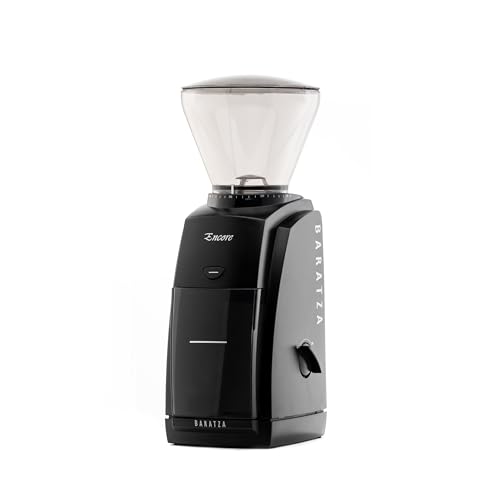
For filter coffee, any quality burr grinder works, start with the Baratza Encore.
For espresso, require stepless or fine-stepped adjustment and espresso-capable settings, start with the Baratza Encore ESP.
For all-purpose use across both brew methods, require stepless all-purpose adjustment, the Fellow Opus is the correct choice.
Step 1: Rule Out Blade Grinders
Before reading further, commit to buying a burr grinder.
Blade grinders are sold in the same stores, often at similar prices, and produce dramatically worse coffee.
A blade grinder's spinning blade creates a random size distribution: fine powder and large chunks in every dose.
The powder over-extracts in seconds, producing bitterness.
The chunks under-extract, producing sourness.
Step 2: Match Grinder to Brew Method
Espresso is the most demanding.
Very fine settings (typically 200-400 micron particle size) Stepless or fine-stepped adjustment (espresso extraction time is sensitive to small grind changes) Consistent particle distribution (high pressure amplifies every inconsistency) Low fines production (excessive fines cause channeling at 9 bars)
Step 3: Understand the Price Tiers
At this tier, manual grinders outperform electric alternatives.
The correct starting point for most households.
The upgrade tier for people who have identified what the Encore does not give them.
The correct mid-range espresso grinder.
Produces noticeably more uniform espresso grinds than the Encore ESP.
Step 4: Understand Which Specs Matter
Burr quality and geometry (determines particle consistency) Adjustment type (stepless vs stepped, important for espresso) Retention (matters for espresso dialing and single-origin tasting) Does not matter as much as advertised:
Common Buying Mistakes
An espresso machine costs 2x to 3x the grinder in a balanced setup.
Buying for aesthetics before function: Grinders are tools.
A beautiful grinder that cannot reach espresso-fine settings is the wrong tool.
Verify the grind range before any other evaluation.
Choosing a grinder with excessive retention for espresso: Hopper grinders retain 3 to 5 grams between doses.
See Also
Coffee Grinder Buying Guide, technical specifications explained in depth Best Coffee Grinders, top picks at all price points Best Coffee Grinders for Espresso, espresso-specific grinders Best Manual Coffee Grinders, hand grinders for travel and home
Put it into practice
Top coffee grinders we recommend


Answers
Frequently asked questions
What is the single most important feature in a coffee grinder?
Any burr grinder, even the cheapest, produces dramatically better coffee than any blade grinder. After choosing burr over blade, consistency of the burrs (burr quality) matters more than burr size, motor watts, or number of settings.
Is a bigger burr always better?
Burr size affects grinding speed and potentially heat buildup, but a 40mm quality burr (Baratza Encore) produces more consistent grinds than a poorly engineered 58mm burr in a cheap grinder. Burr quality and geometry matter more than diameter at consumer price points.
What does grind consistency actually mean in practice?
Grind consistency means that every particle in a dose is the same size. In a consistent grind, water extracts compounds from all particles at the same rate, producing a balanced cup. An inconsistent grind produces simultaneous over-extraction (bitterness from small particles) and under-extraction (sourness from large particles) in the same cup.
Keep researching
Related guides & best picks
- ReviewBaratza Encore ESP Review 2026: The Correct Entry Espresso GrinderAfter 6 months using the Baratza Encore ESP daily with a Gaggia Classic Pro and Breville Bambino Plus, we can confirm: it is the correct minRead
- ReviewEureka Mignon Silenzio Review 2026: The Best Mid-Range Espresso GrinderAfter 8 months with the Eureka Mignon Silenzio paired with a Lelit Mara X and Rancilio Silvia Pro, we can confirm it is the best mid-range eRead
- Buying guideCoffee Grinder Buying Guide 2026: How to Choose the Right Burr GrinderA complete decision framework for choosing a coffee grinder: burr vs blade, conical vs flat, manual vs electric, stepless vs stepped, and whRead
- TroubleshootingCoffee Grinder Not Grinding Consistently: 8 Causes and FixesIf your coffee grinder produces uneven grinds, clumps, or wildly variable extraction times, the problem is diagnosable. We cover the 8 most Read
- Best picksBest Coffee Grinders 2026: 12 Burr Grinders Compared for Espresso and FilterGrind consistency is the most important variable in coffee quality.Read
- Best picksBest Coffee Grinders for Espresso 2026: 10 Burr Grinders That Pull Real ShotsThe grinder determines espresso quality more than the machine.Read