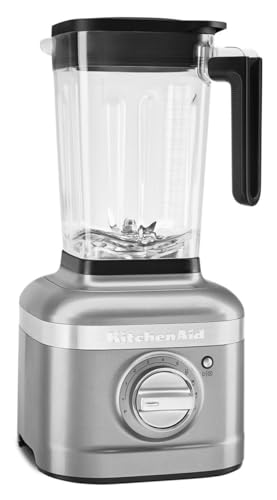
Dash
Dash Go Compact Blender
- 300W motor
- 20-oz blending cup
- Compact, low-profile motor base
- One-touch operation
- Dishwasher-safe cup (top rack)
Sponsored link · confirm price and availability on Amazon · updated
On this page
Is the Dash Go Compact Blender worth it?
Yes, for the right buyer. The Dash Go Compact Blender ranks #10 in our Best Personal Blenders list. Its biggest strength: smallest motor base footprint in this roundup, ideal for tight counter or cabinet space. The main caveat: 300W trails most competitors on fully frozen fruit and ice.
Overview
What the Dash Go Compact Blender does well
All that extra pitcher means extra washing for a drink you're finishing in five minutes. Its case rests on smallest motor base footprint in this roundup, ideal for tight counter or cabinet space and 20-oz cup is a practical single-serving size for daily shakes. Keep in mind that 300W trails most competitors on fully frozen fruit and ice.
Specs that matter
Key features
- 300W motor
- 20-oz blending cup
- Compact, low-profile motor base
- One-touch operation
- Dishwasher-safe cup (top rack)
The trade-offs
Pros & cons
Pros
- Smallest motor base footprint in this roundup, ideal for tight counter or cabinet space
- 20-oz cup is a practical single-serving size for daily shakes
- Simple one-touch operation with no settings to learn
Cons
- 300W trails most competitors on fully frozen fruit and ice
- Smallest review base in this roundup (5,400 ratings), least track record for long-term durability
- No speed control and limited to soft-ingredient blends
Fit check
Should you buy the Dash Go Compact Blender?
Think twice if this matters to you
- 300W trails most competitors on fully frozen fruit and ice
- Smallest review base in this roundup (5,400 ratings), least track record for long-term durability
- No speed control and limited to soft-ingredient blends
Where it ranks
Featured in 1 best-of list
| List | Rank |
|---|---|
| Best Personal Blenders | #10 / 10 |
Cross-shop
Alternatives to the Dash Go Compact Blender
Products ranked near it in our research, each better for a slightly different buyer.


Buying advice: blenders
- High-performance blenders (1400W+) crush ice and frozen fruit without stalling; they also carry longer warranties because the motors are built for it.
- Wide, low jars make thick blends (nut butter, hummus) easier to tamp and pour; tall narrow jars vortex thin smoothies better.
- Variable speed dials give more control than preset buttons for most tasks. Look for a tamper included with high-performance models.
- Powerful blenders are loud, there's no way around physics, but some dampen better than others.
- Self-cleaning cycles (water + drop of soap, 30–60 seconds) are standard on better models and genuinely work.
Read the full guides
Answers
Dash Go Compact Blender: common questions
Is the Dash Go Compact Blender worth buying?
Yes, for the right buyer. The Dash Go Compact Blender ranks #10 in our Best Personal Blenders list. Its biggest strength: smallest motor base footprint in this roundup, ideal for tight counter or cabinet space. The main caveat: 300W trails most competitors on fully frozen fruit and ice.
What are the downsides of the Dash Go Compact Blender?
The main trade-offs owners and reviewers point to: 300W trails most competitors on fully frozen fruit and ice; smallest review base in this roundup (5,400 ratings), least track record for long-term durability; no speed control and limited to soft-ingredient blends.
What are the key features of the Dash Go Compact Blender?
300W motor, 20-oz blending cup, Compact, low-profile motor base, One-touch operation and Dishwasher-safe cup (top rack).
What are the best alternatives to the Dash Go Compact Blender?
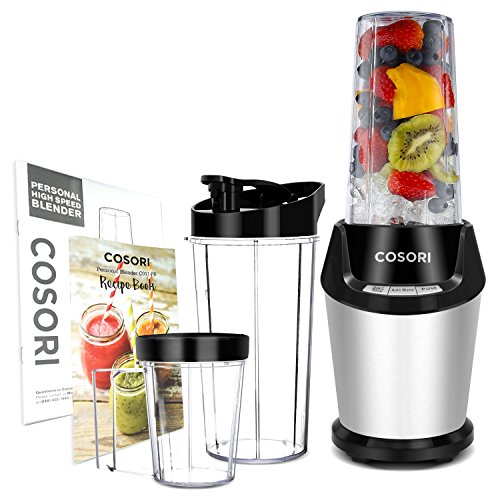
Worth comparing: Oster BLSTPB-WBL My Blend 250-Watt Personal Blender, Hamilton Beach Personal Creations Blender and COSORI Personal Blender for Shakes and Smoothies. Each ranks near it in our research for a slightly different buyer.
Where can I buy the Dash Go Compact Blender?
It's sold on Amazon. Prices and stock change often, so check the current listing before you buy, our link takes you straight to it.
What is the most important feature in a blender for smoothies?
Blade-to-container geometry: specifically how well the container shape creates a downward vortex that continuously pulls frozen fruit and leafy greens into the blade path without chunks escaping the cutting zone. A blender with poor vortex geometry leaves unblended chunks floating at the sides of the container regardless of how long it runs, a problem more apparent with frozen fruit and kale than with liquid-heavy blends. After vortex geometry: motor power (700W minimum for frozen fruit; 1,000W for reliable daily use without motor strain), blade sharpness and angle (flat vs angled blades produce different cutting profiles), and container width (wider containers require more RPM for the same blade tip speed).
How long should a smoothie take to blend?
30 to 60 seconds is the target blend time for a properly prepared smoothie in a well-designed blender. Preparation matters as much as blender power: add liquid to the container first (it creates the fluid vortex that pulls solids down), then add softer ingredients (fresh fruit, protein powder), then frozen ingredients on top. In a Vitamix: 45 seconds on Variable 10 produces consistently smooth results on any standard smoothie combination. In a Ninja at 1,000W: 45 to 60 seconds on max with occasional pulse to break up chunks. In a NutriBullet 600W: 30 to 45 seconds for pre-softened frozen fruit; 45 to 60 seconds for full-frozen. If a blend requires more than 90 seconds to reach smooth consistency: the blender is underpowered for the recipe, or the ingredient ratio (too much frozen, too little liquid) is causing the problem.
More blenders shortlists
More like this